"I highly recommend their tour! Not only do you learn about the auroras and how they work, but you also have the opportunity to spend time with two people who are passionate about their work and strive to provide an unforgettable experience!"
Fairbanks · Alaska · Under the Auroral Oval
A guided aurora-viewing tour from Fairbanks — the city that sits directly under the auroral oval. Chase the Northern Lights with a local guide, wait in a heated lodge, and let them photograph you beneath the sky.
The Experience
Everything that stacks the odds of catching the Northern Lights on a clear winter night.
Four steps from your hotel to the aurora — with a local guide doing the driving, the chasing, and the photos.
Your guide collects you from your Fairbanks hotel in the evening — no driving on icy winter roads, no navigating in the dark. Aurora tours run late, so most depart between 9 PM and midnight.
Escape the city's light dome. Your guide drives toward the clearest, darkest horizon — a ridge-top cabin, a summit glass house, or an open valley — reading cloud cover and the aurora forecast as you go.
Aurora viewing is a waiting game. You warm up between sightings in a heated lodge, cabin, or glass house with hot cocoa, coffee, and snacks — not shivering in a parking lot.
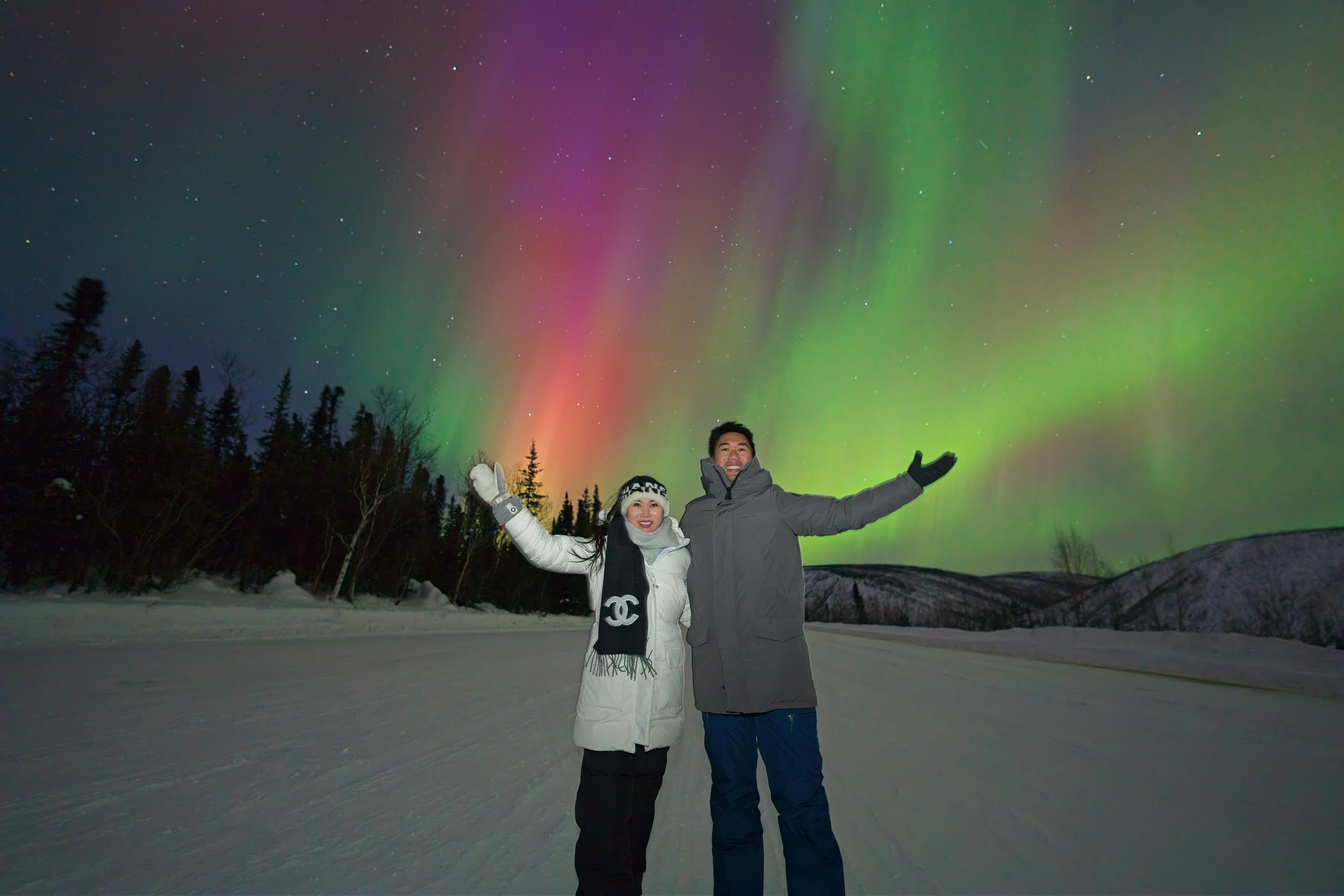
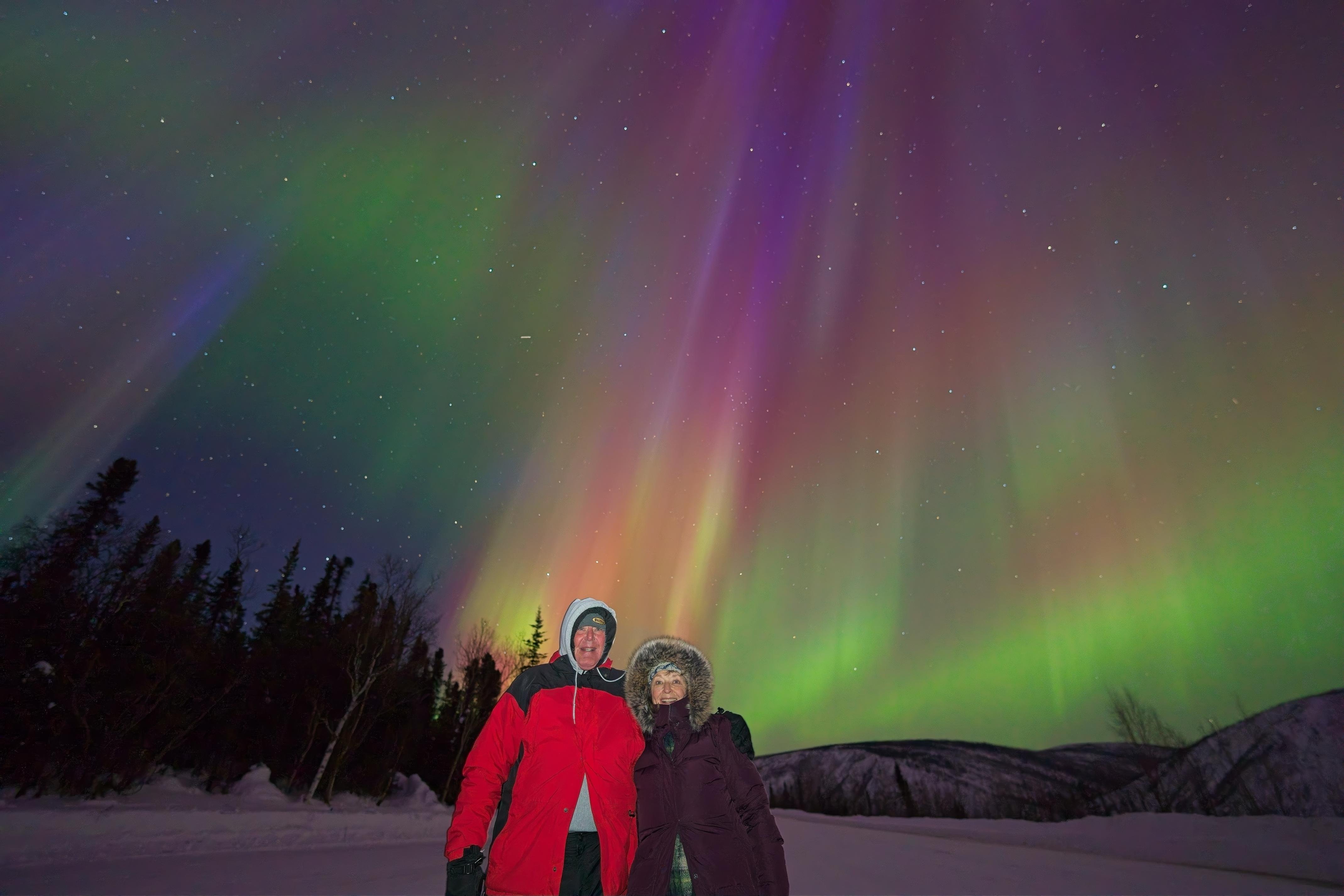
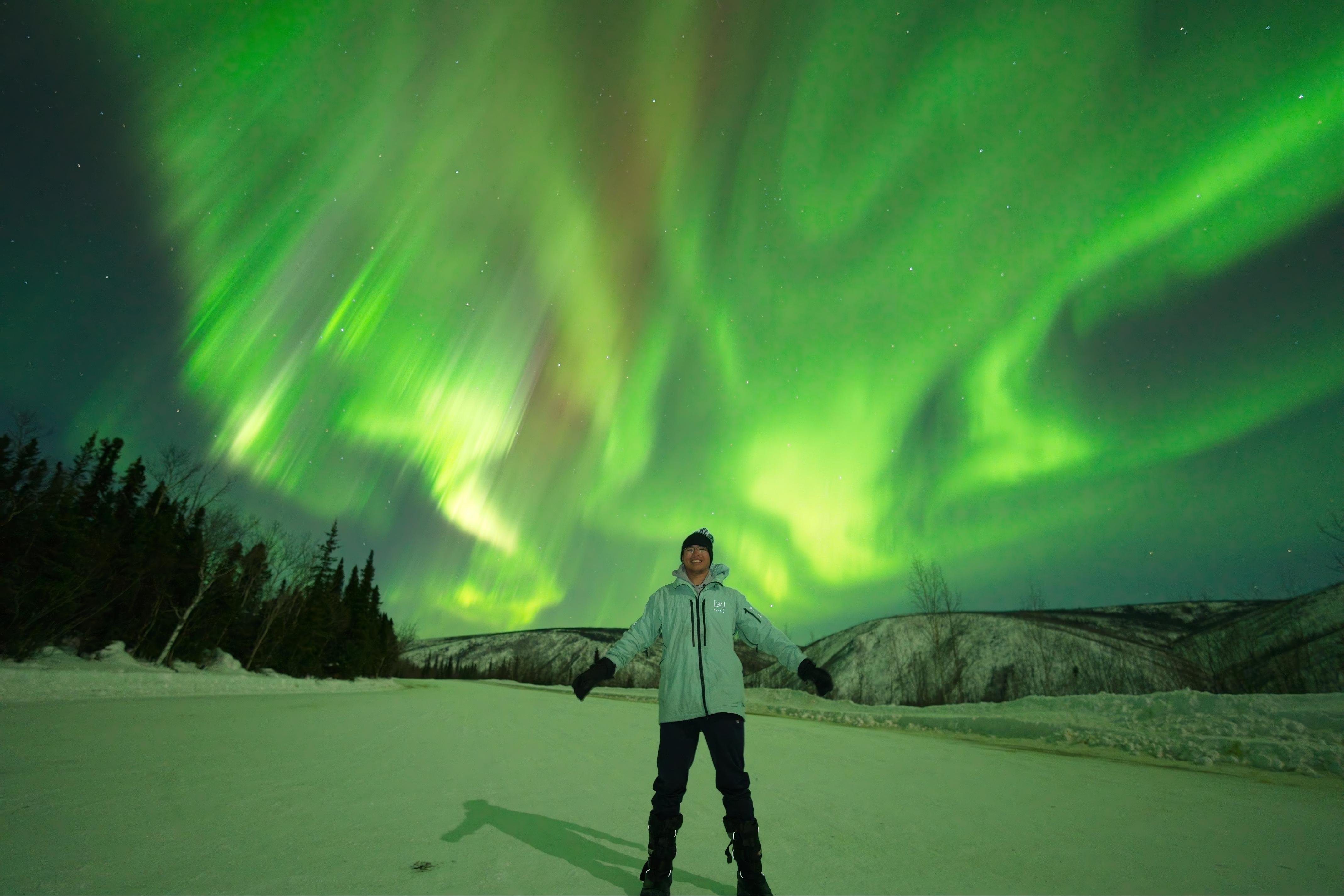
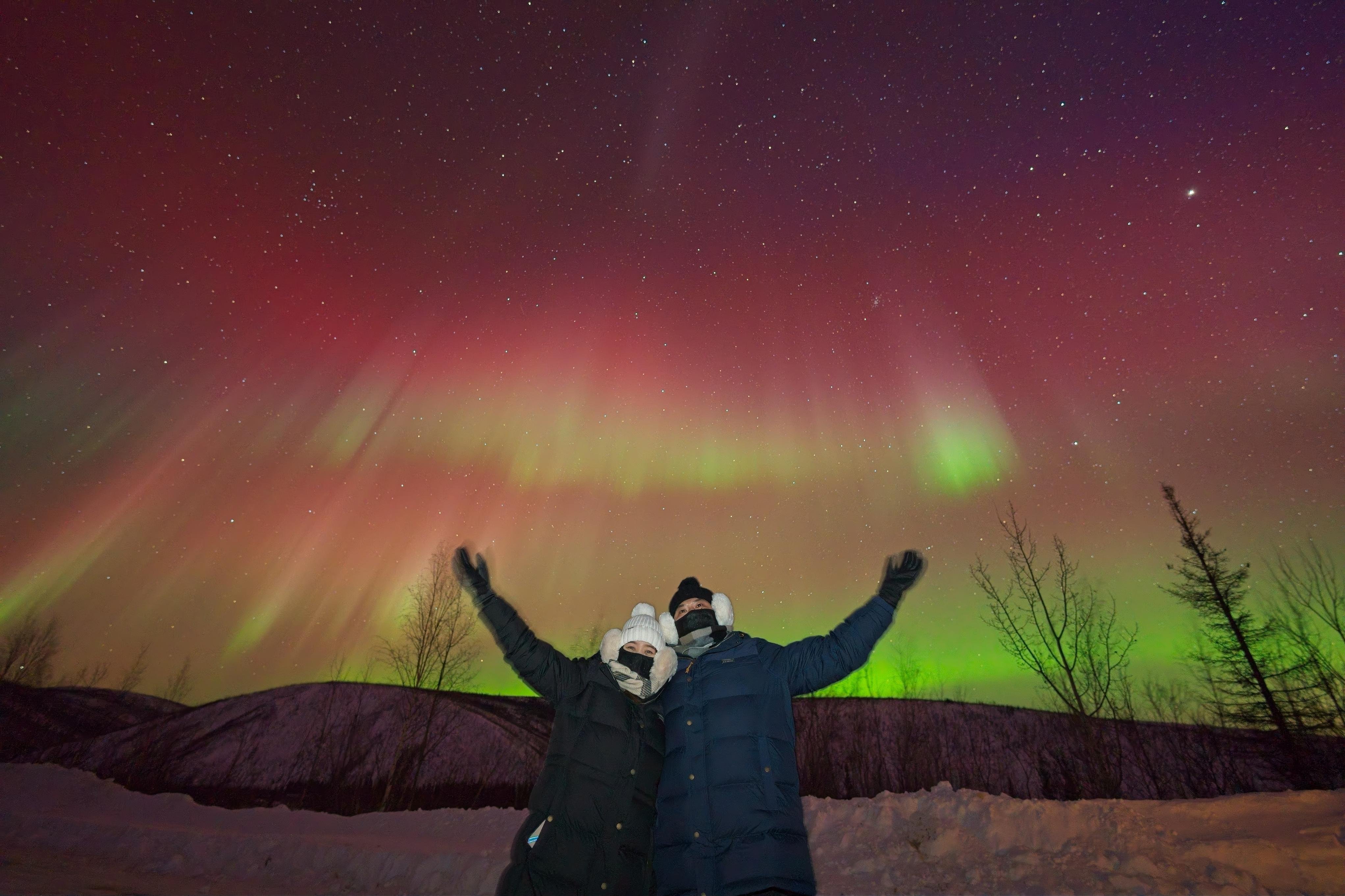
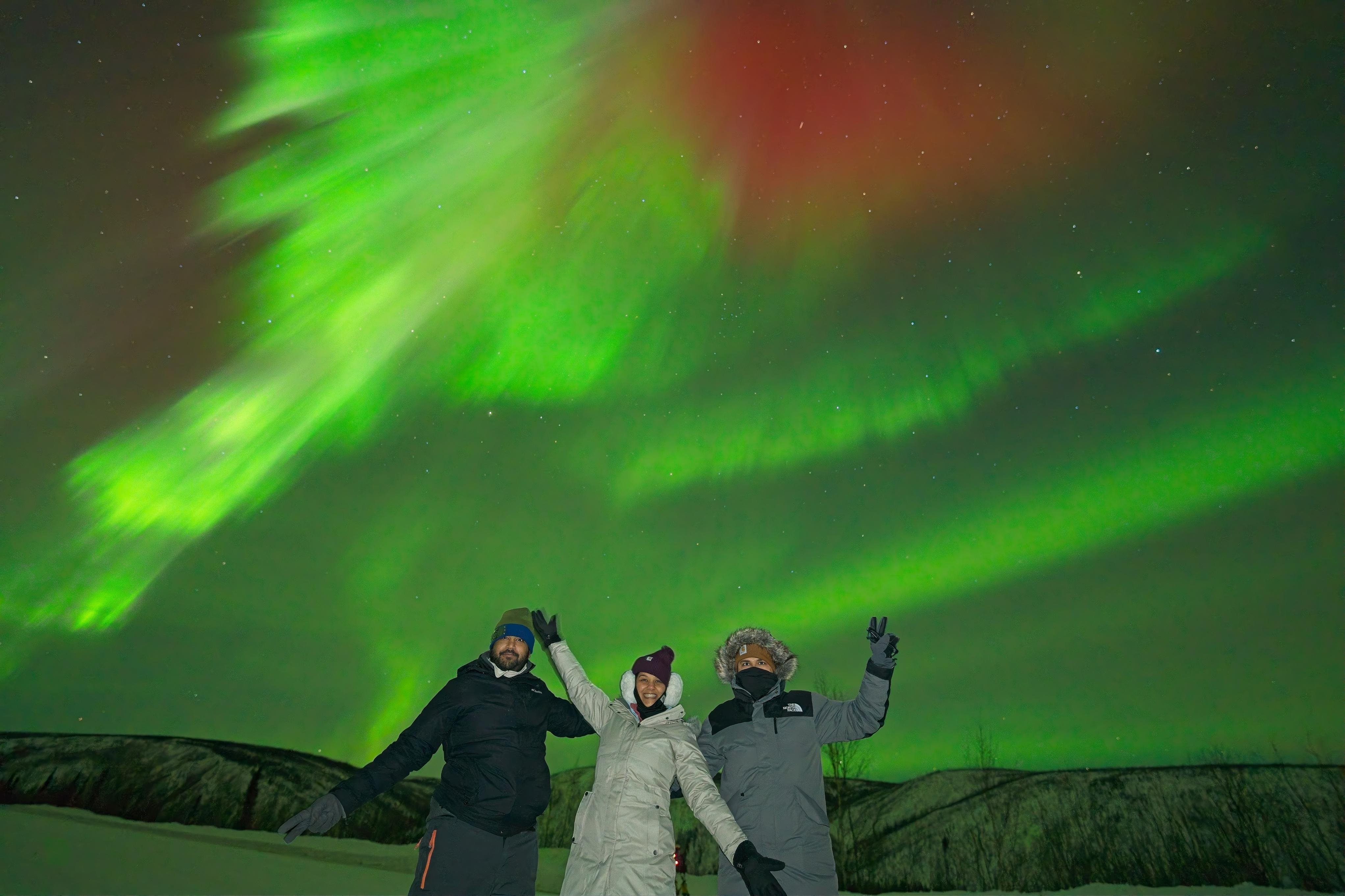
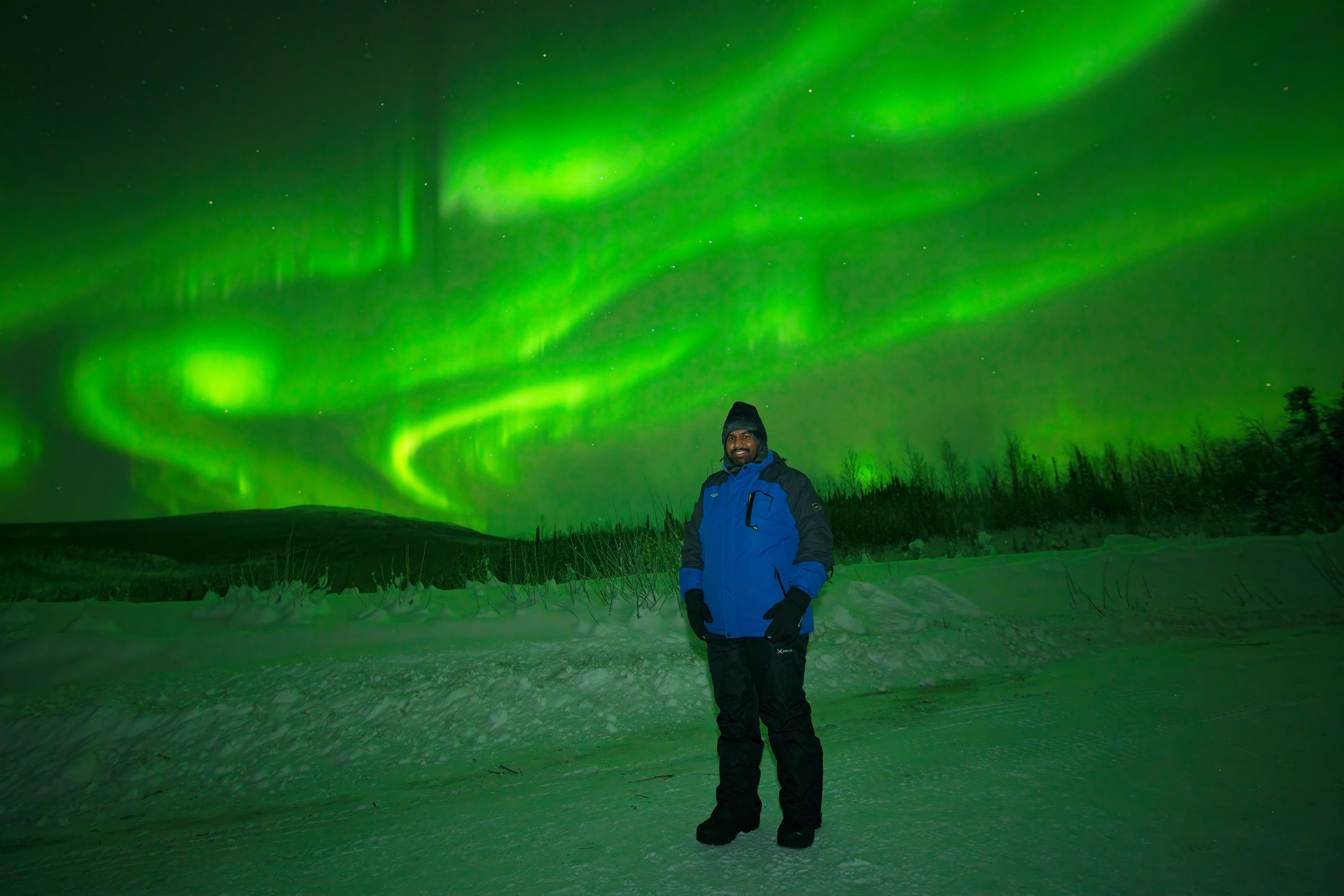
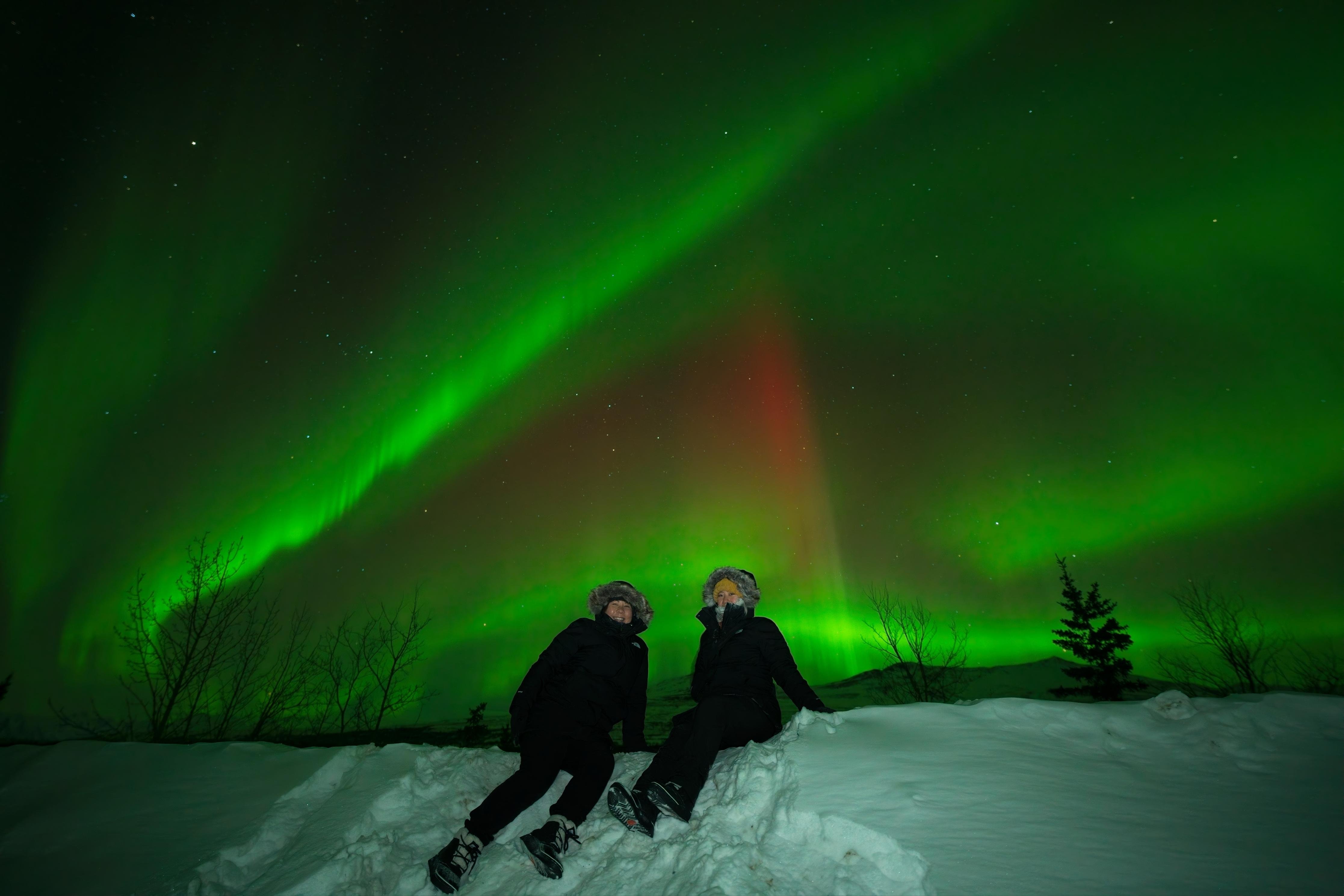
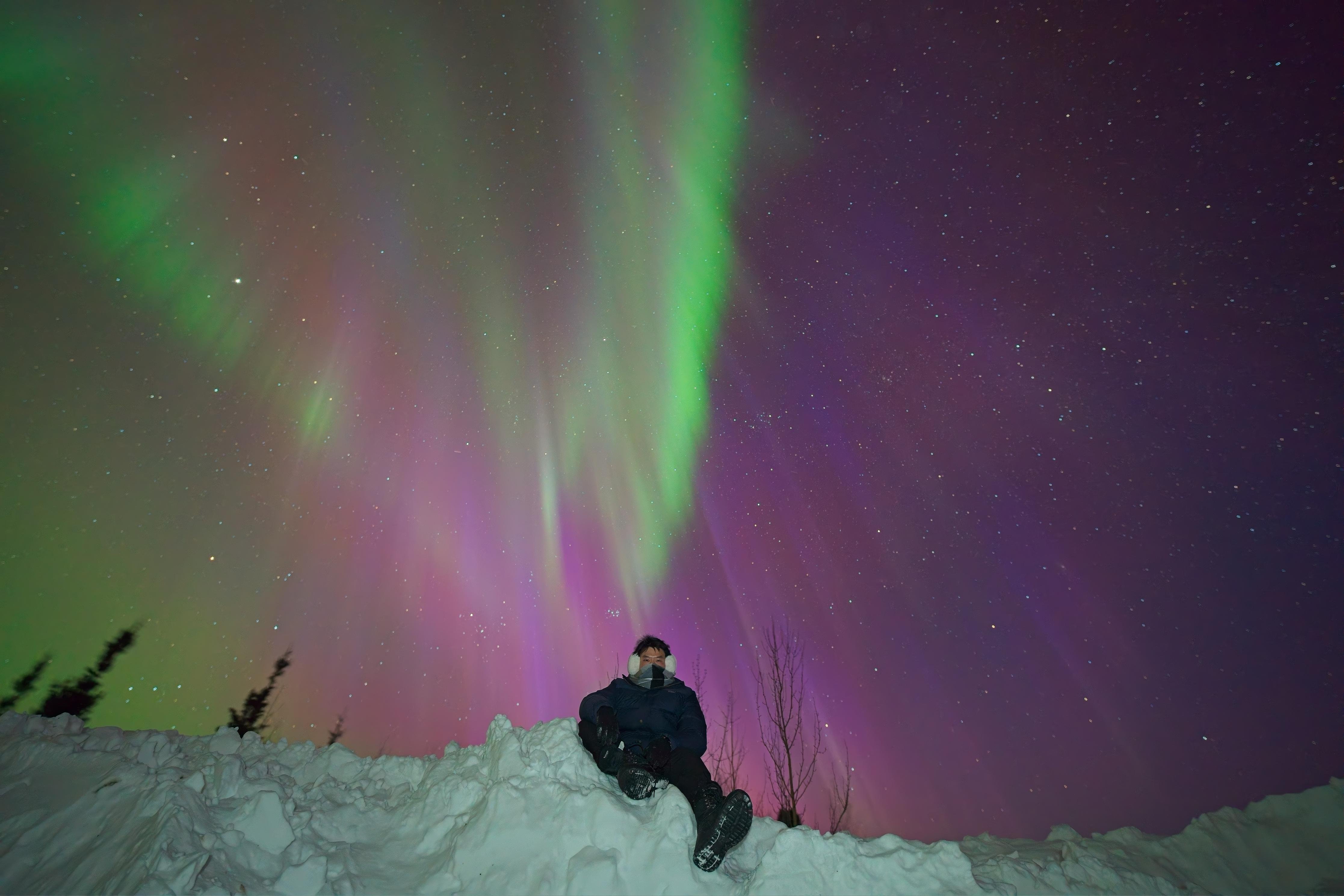
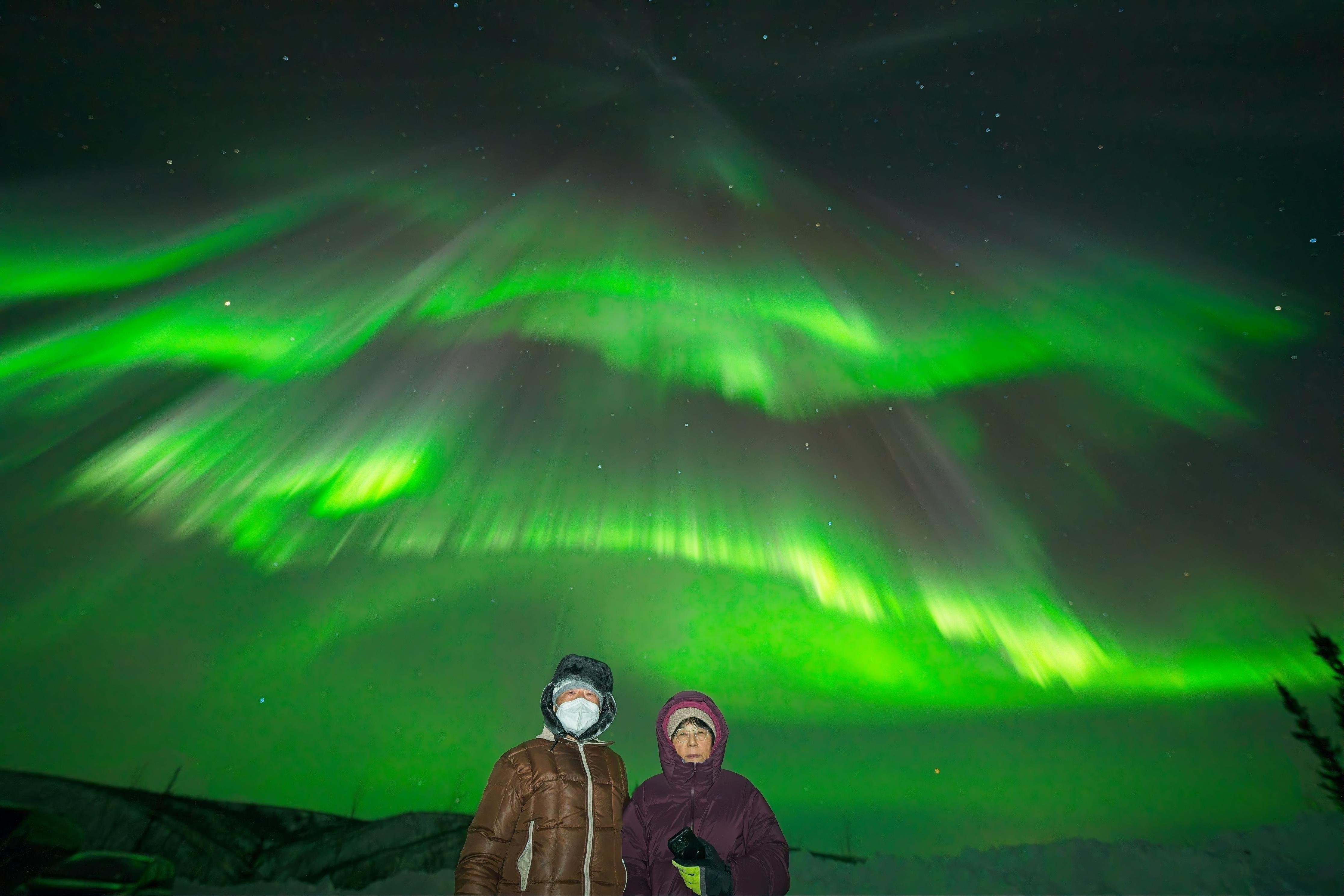
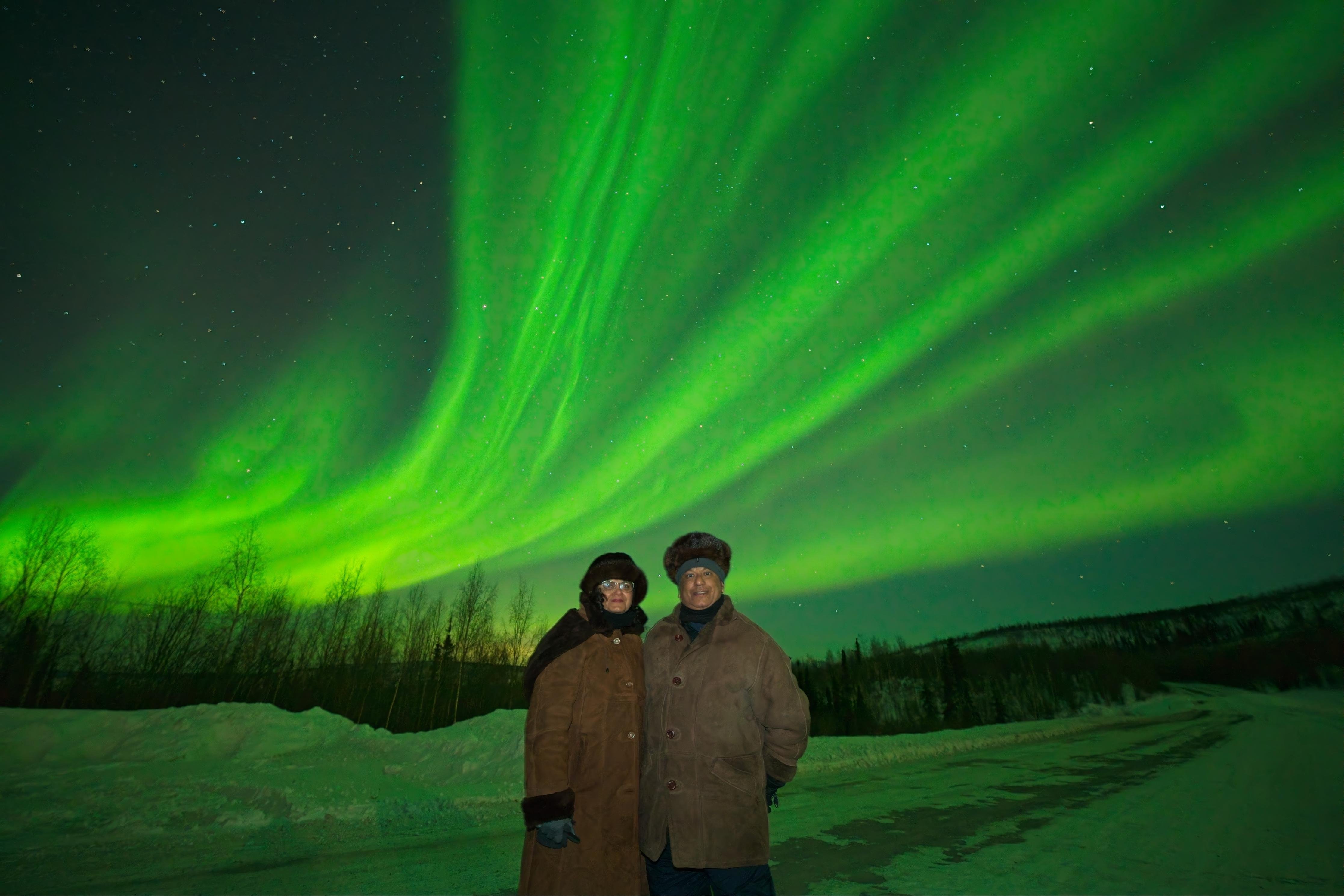
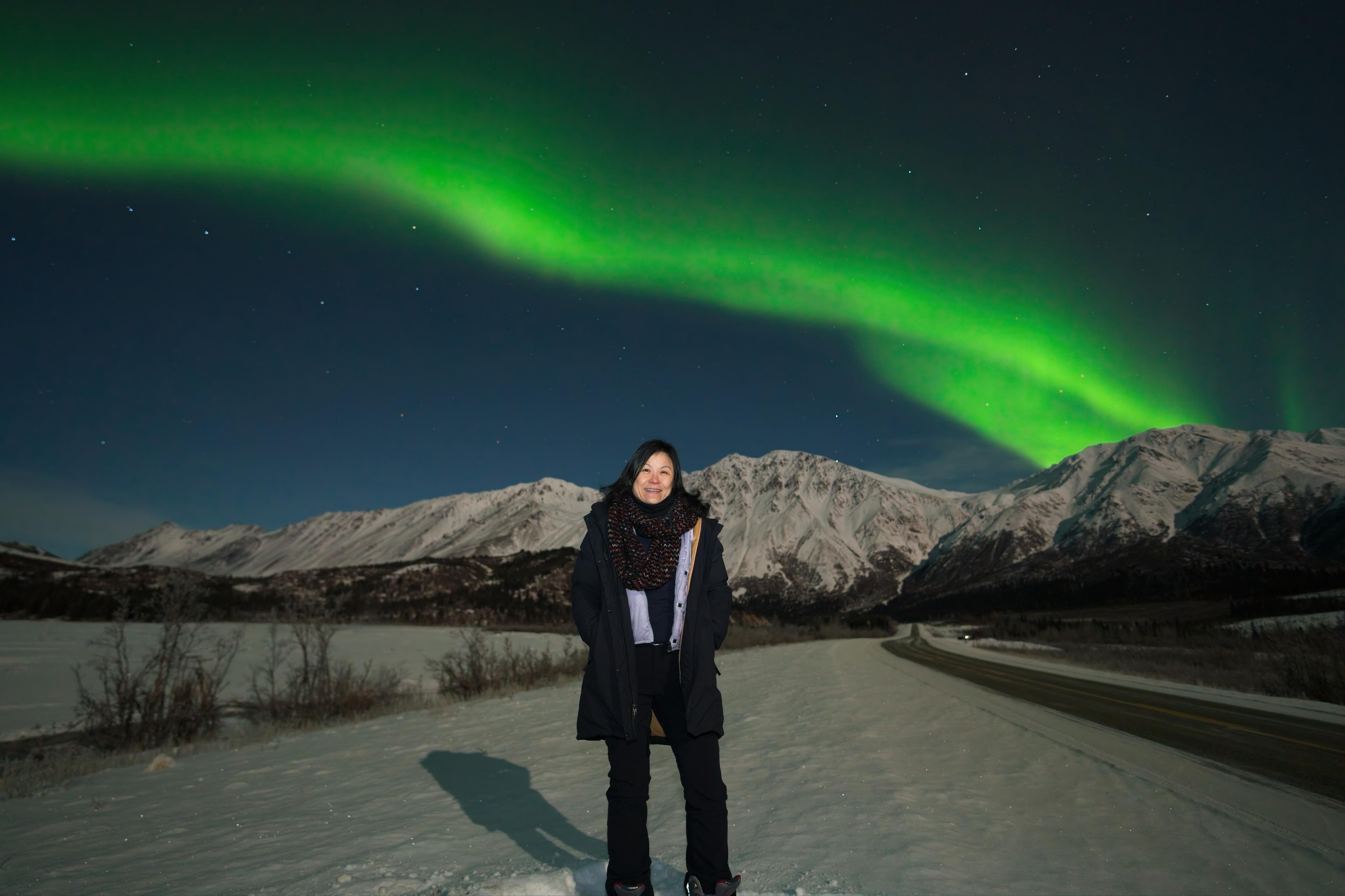
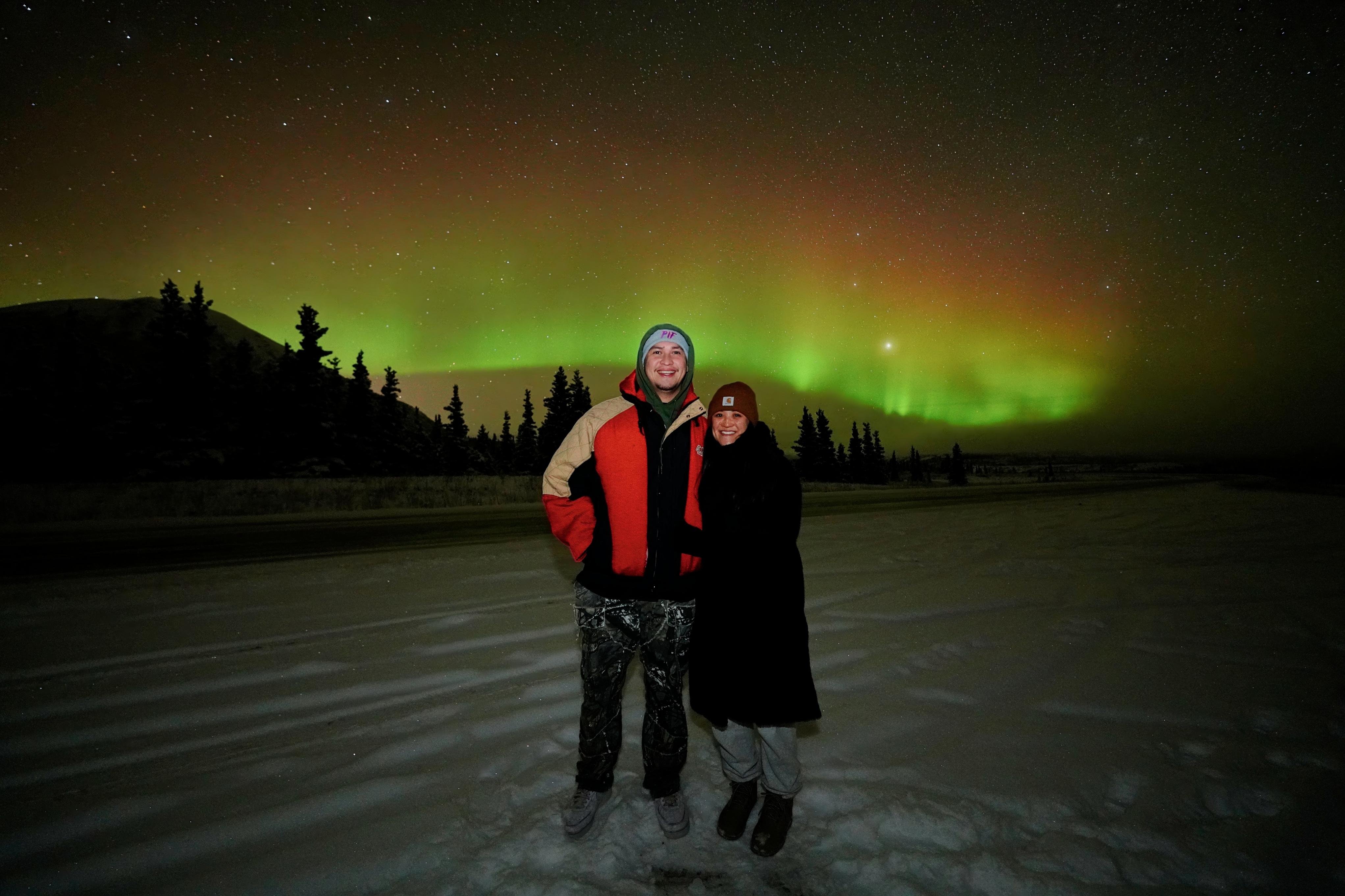
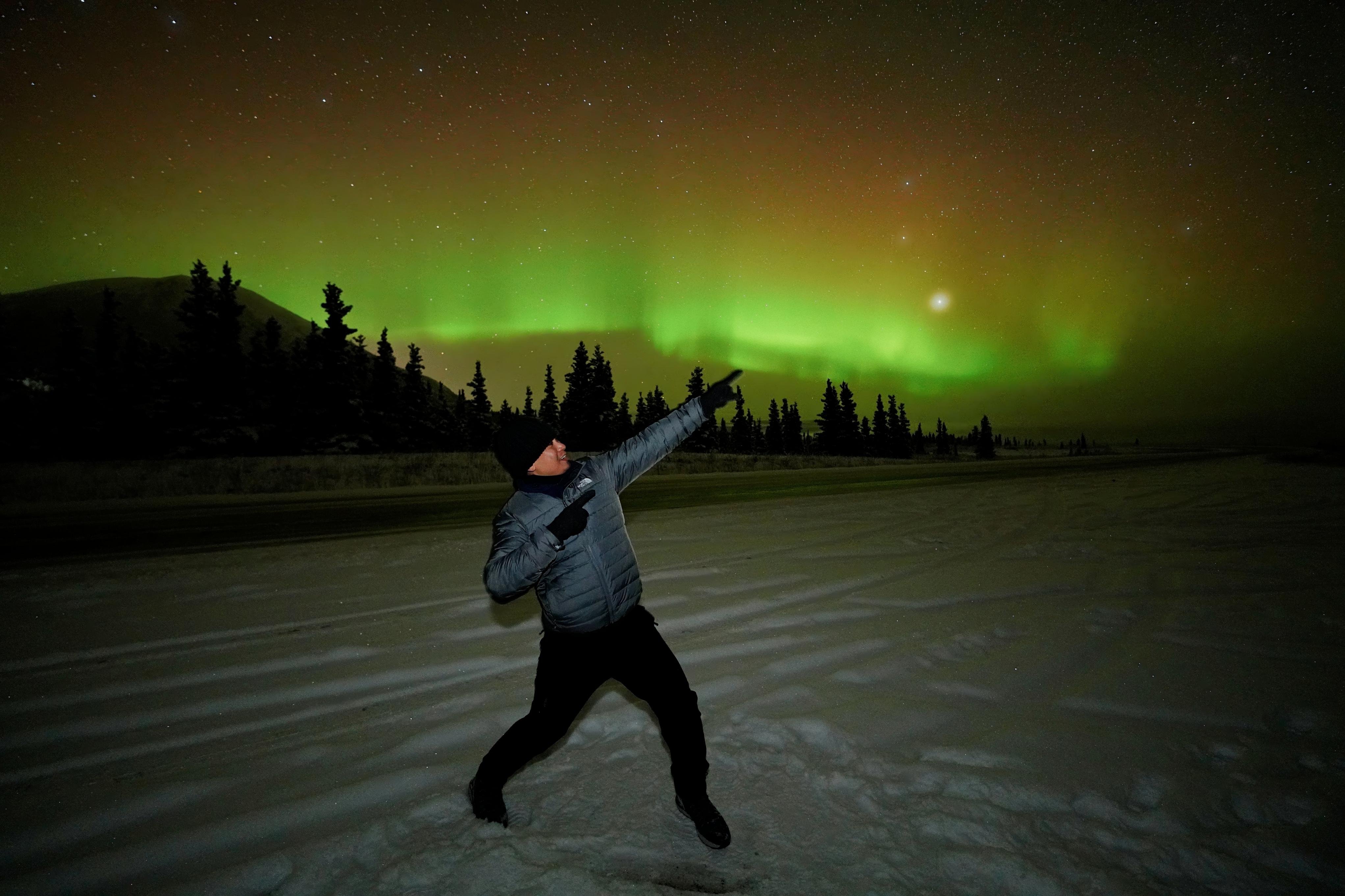
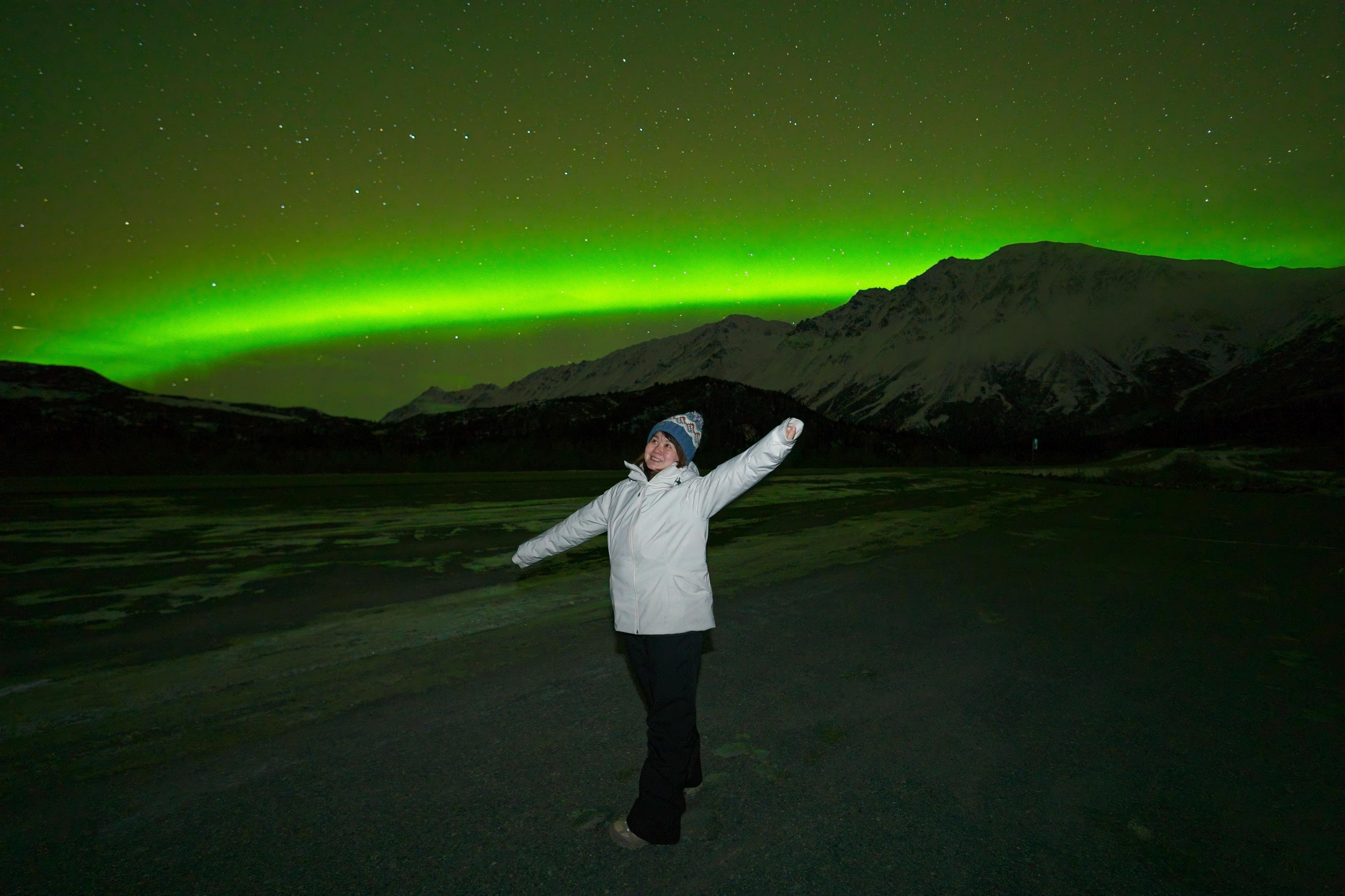
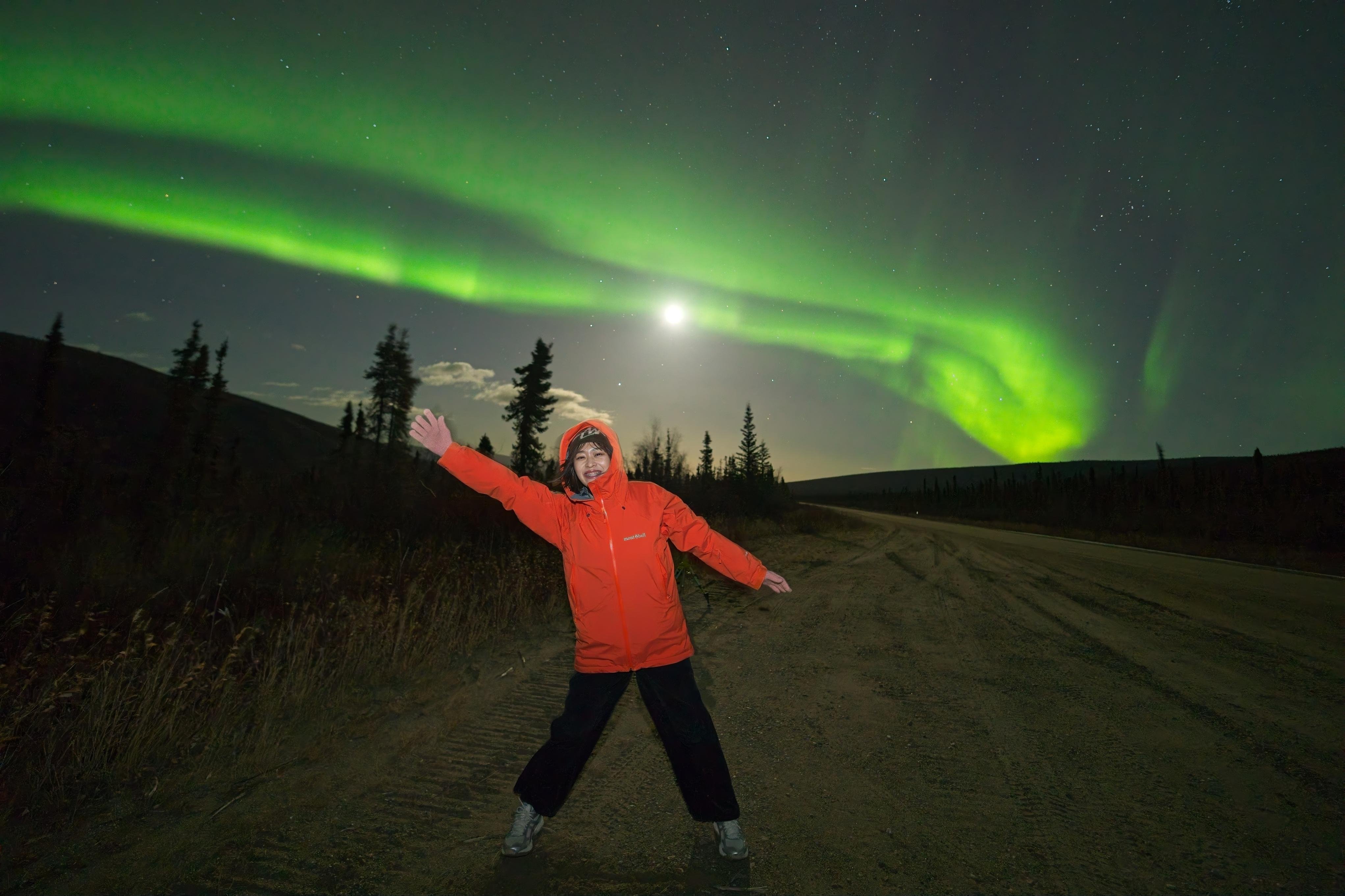
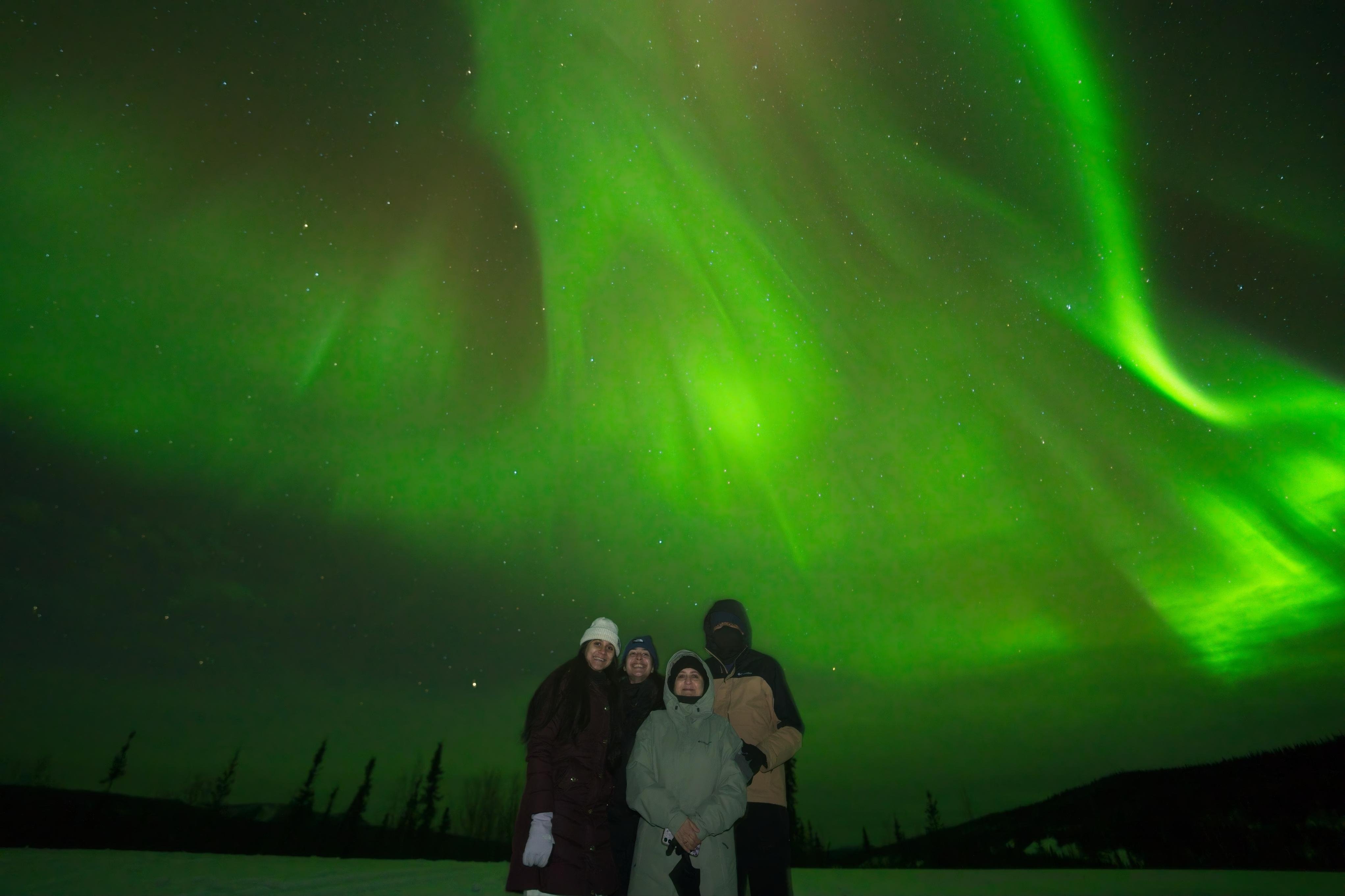
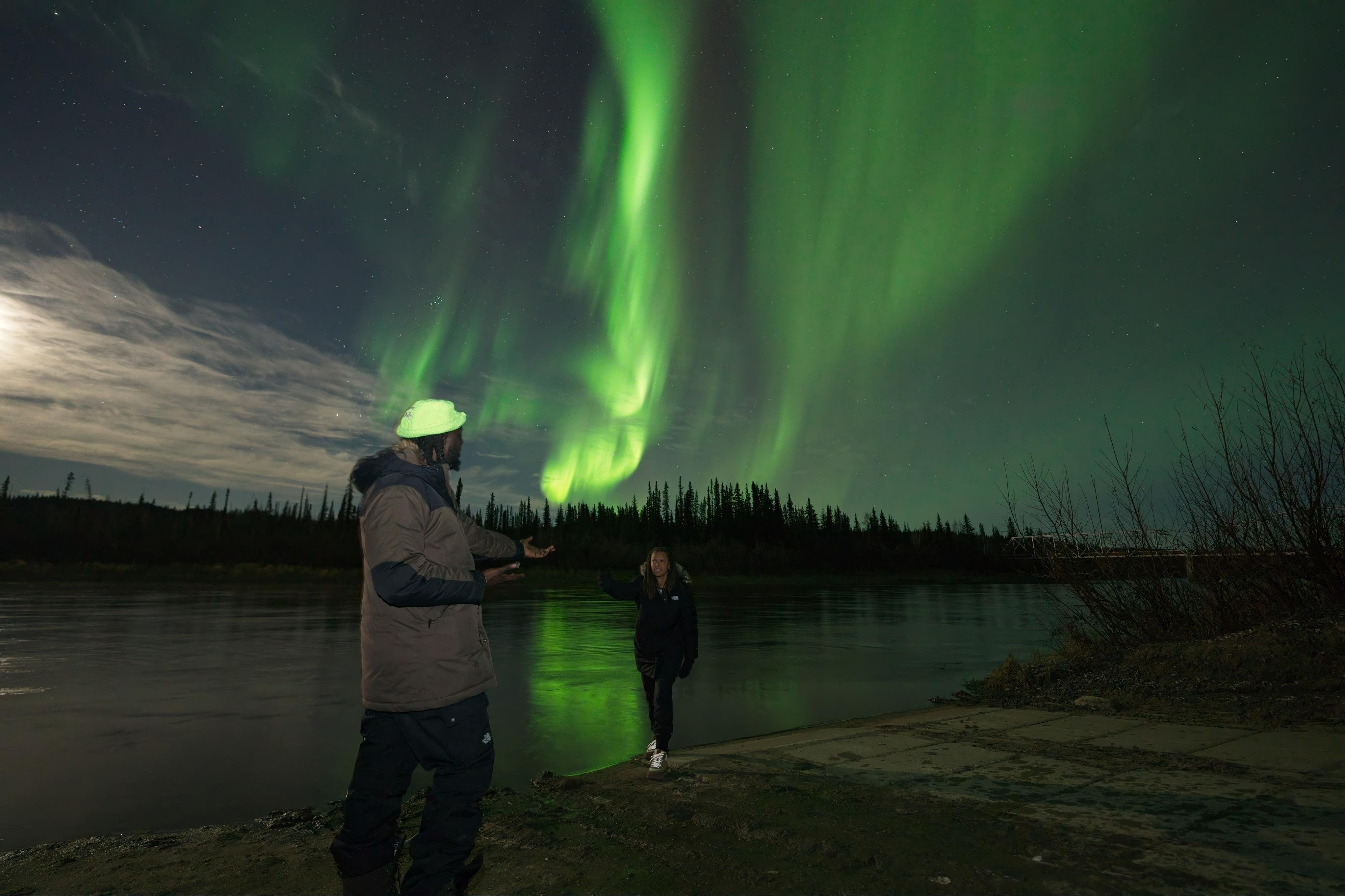
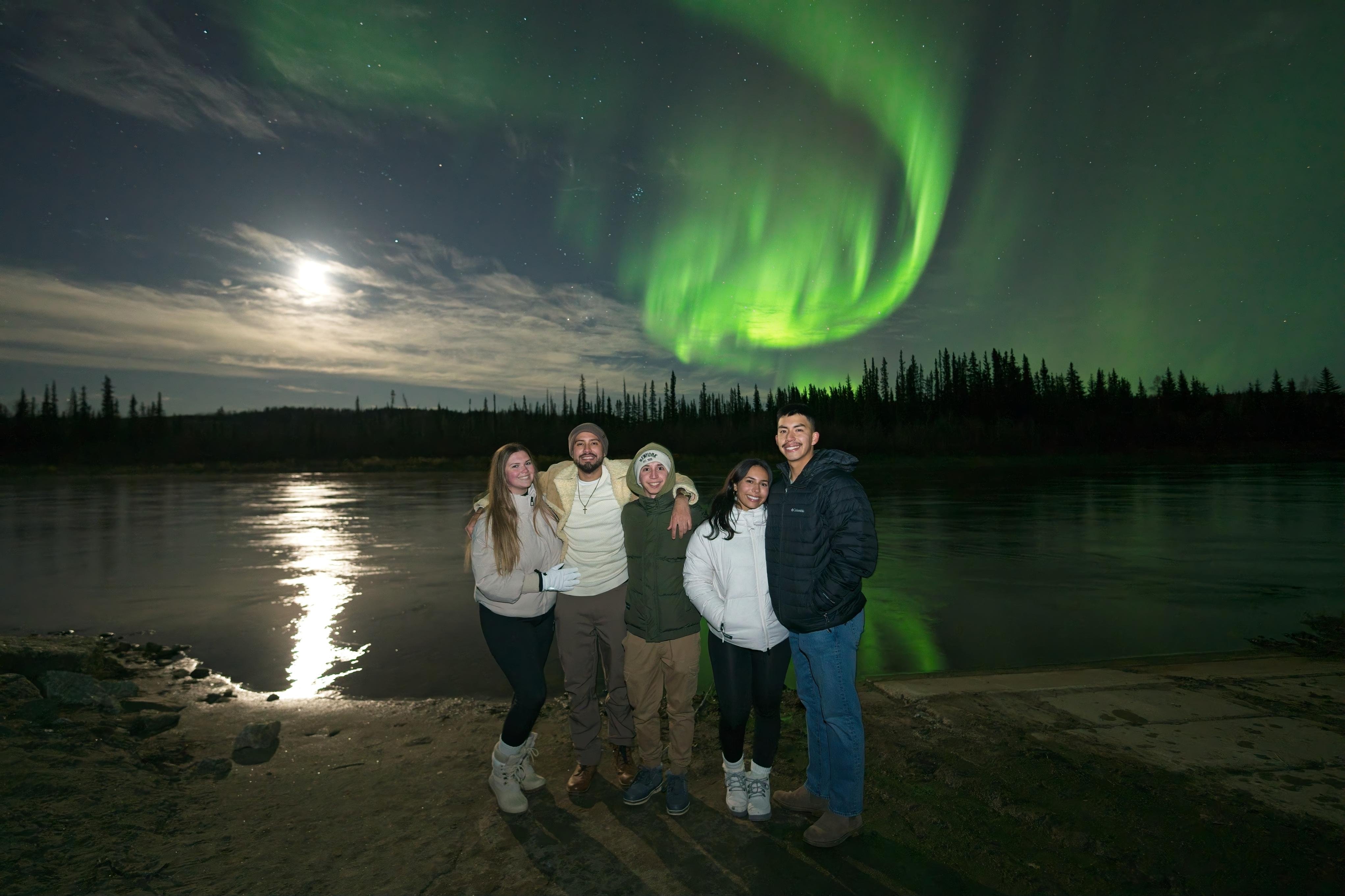
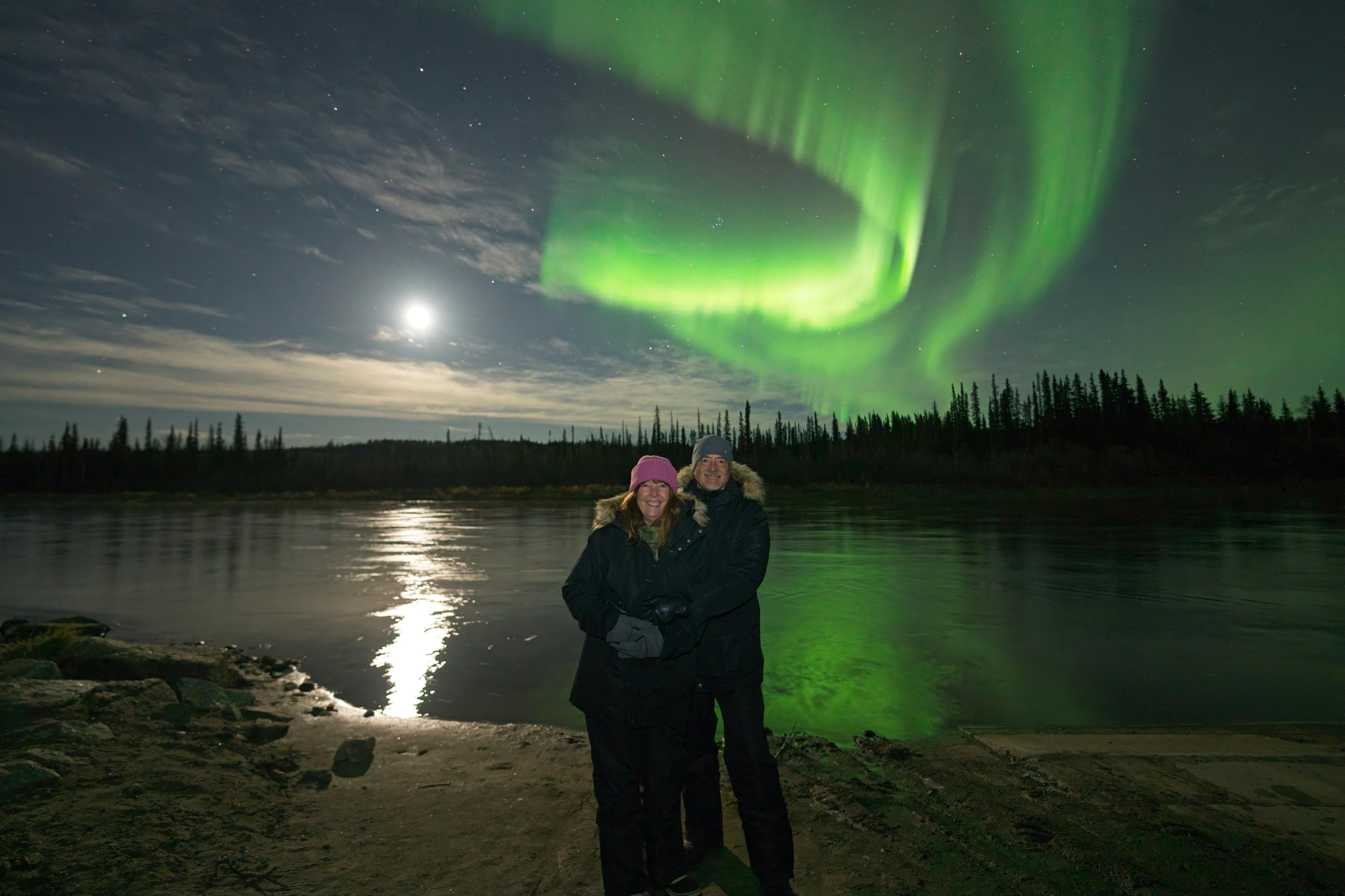
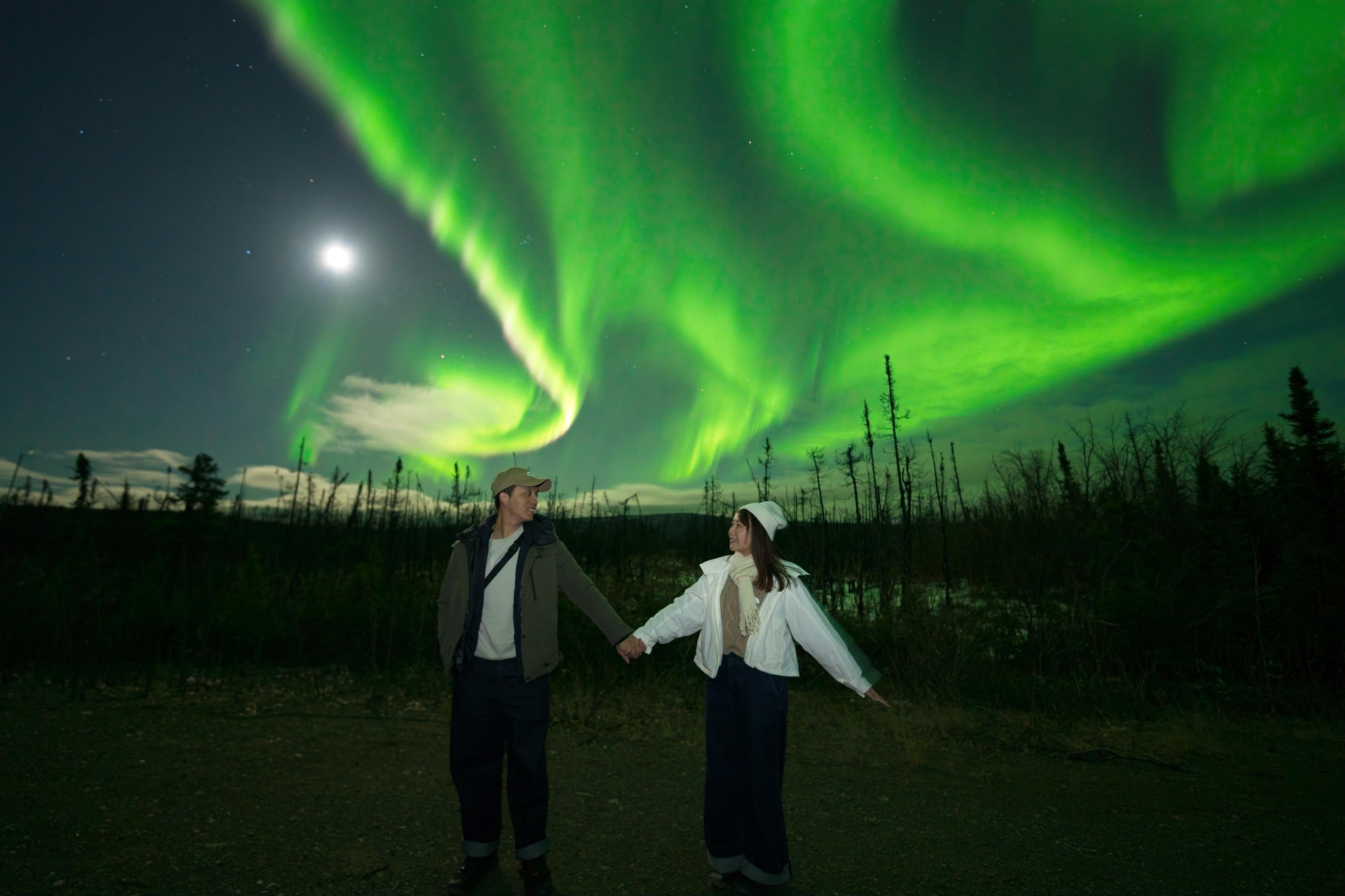
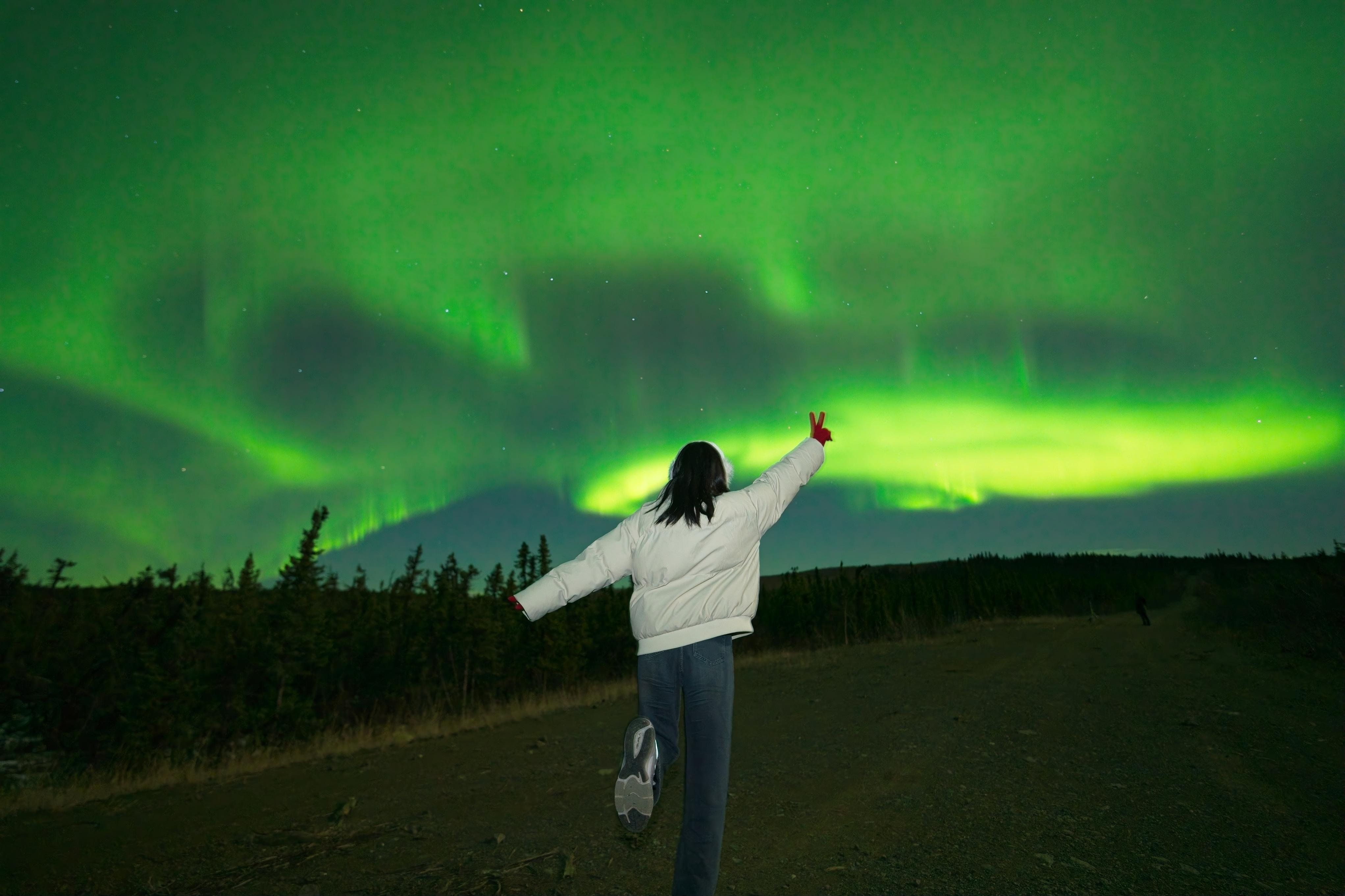
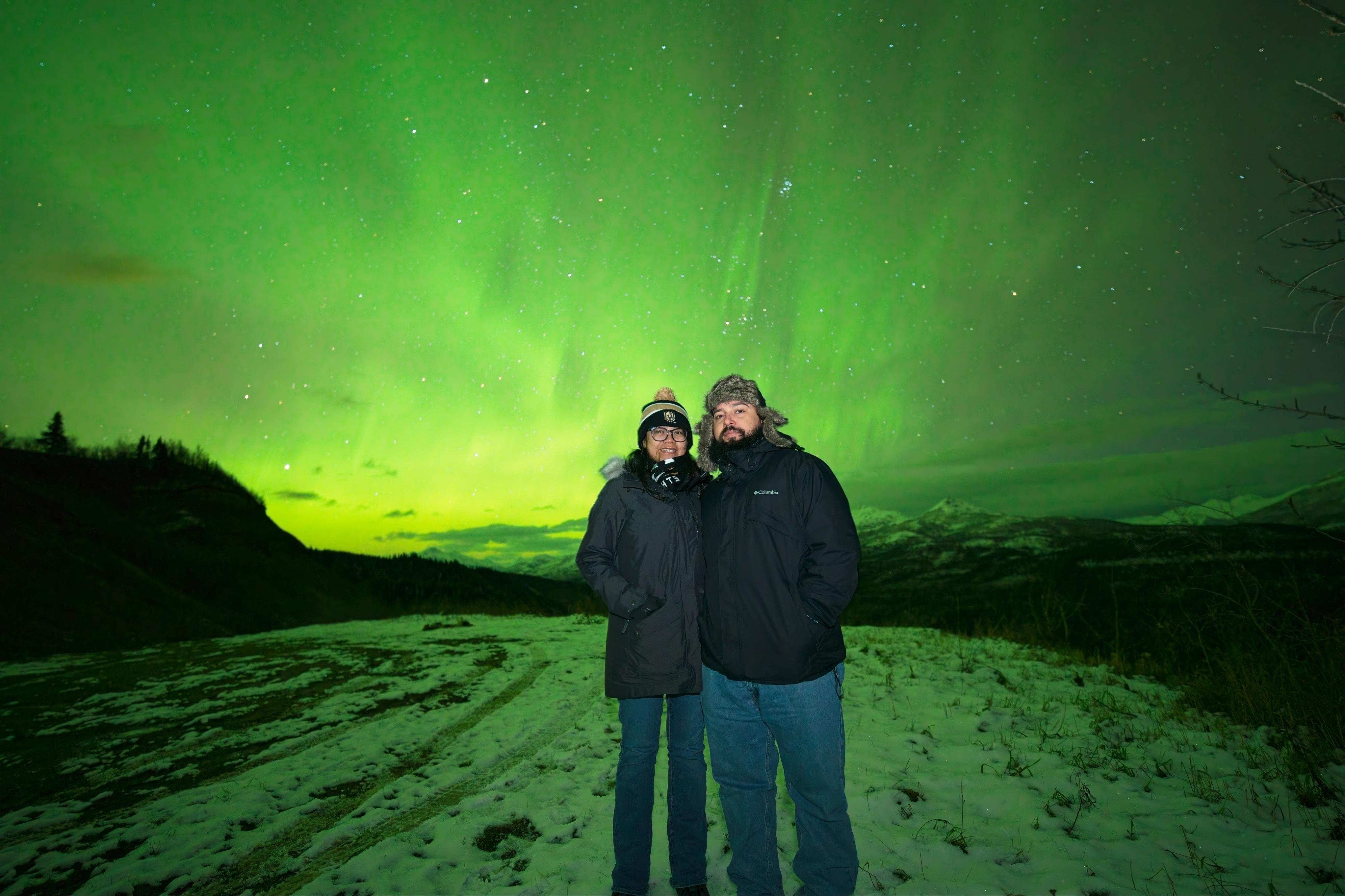
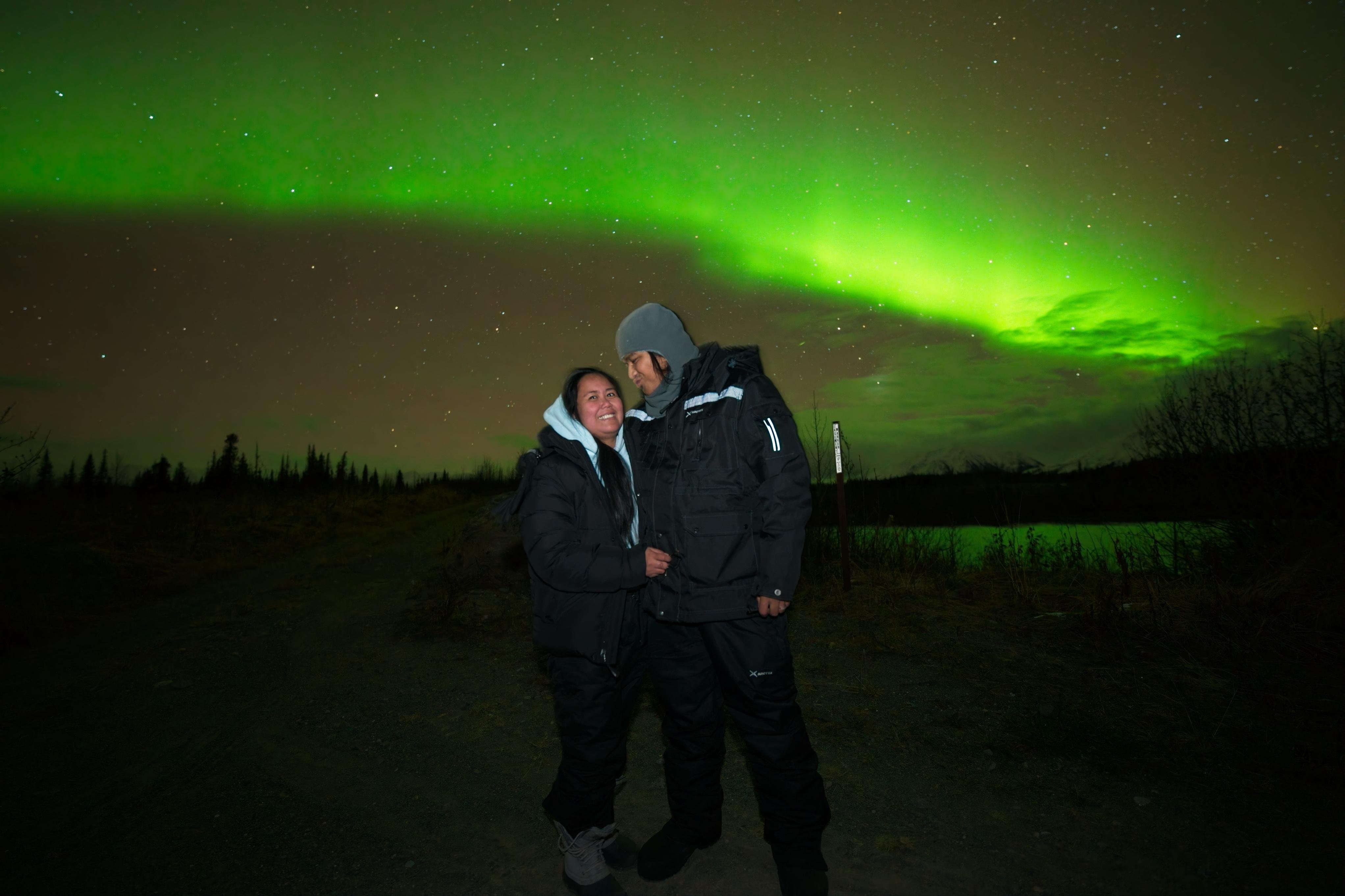
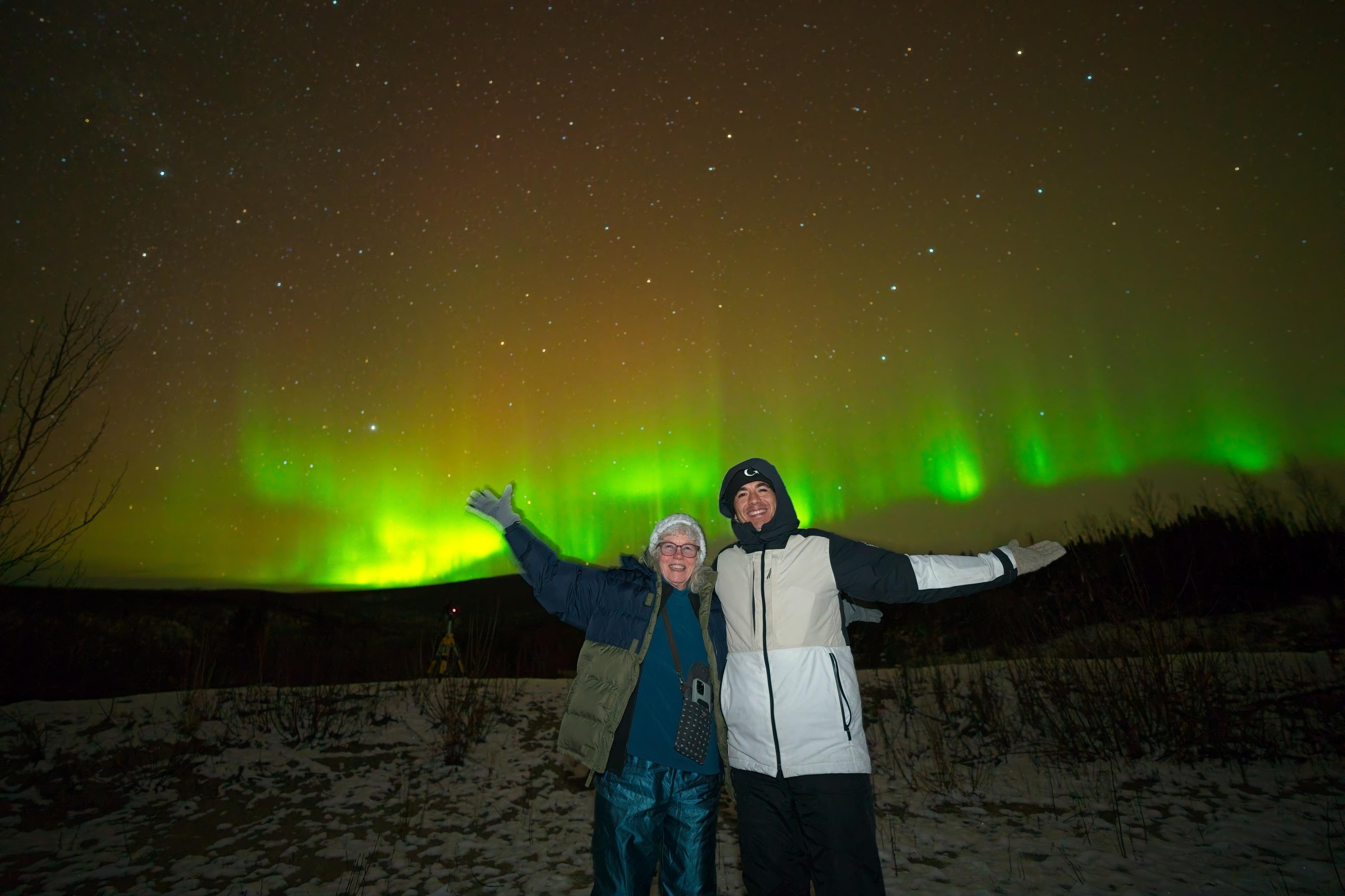
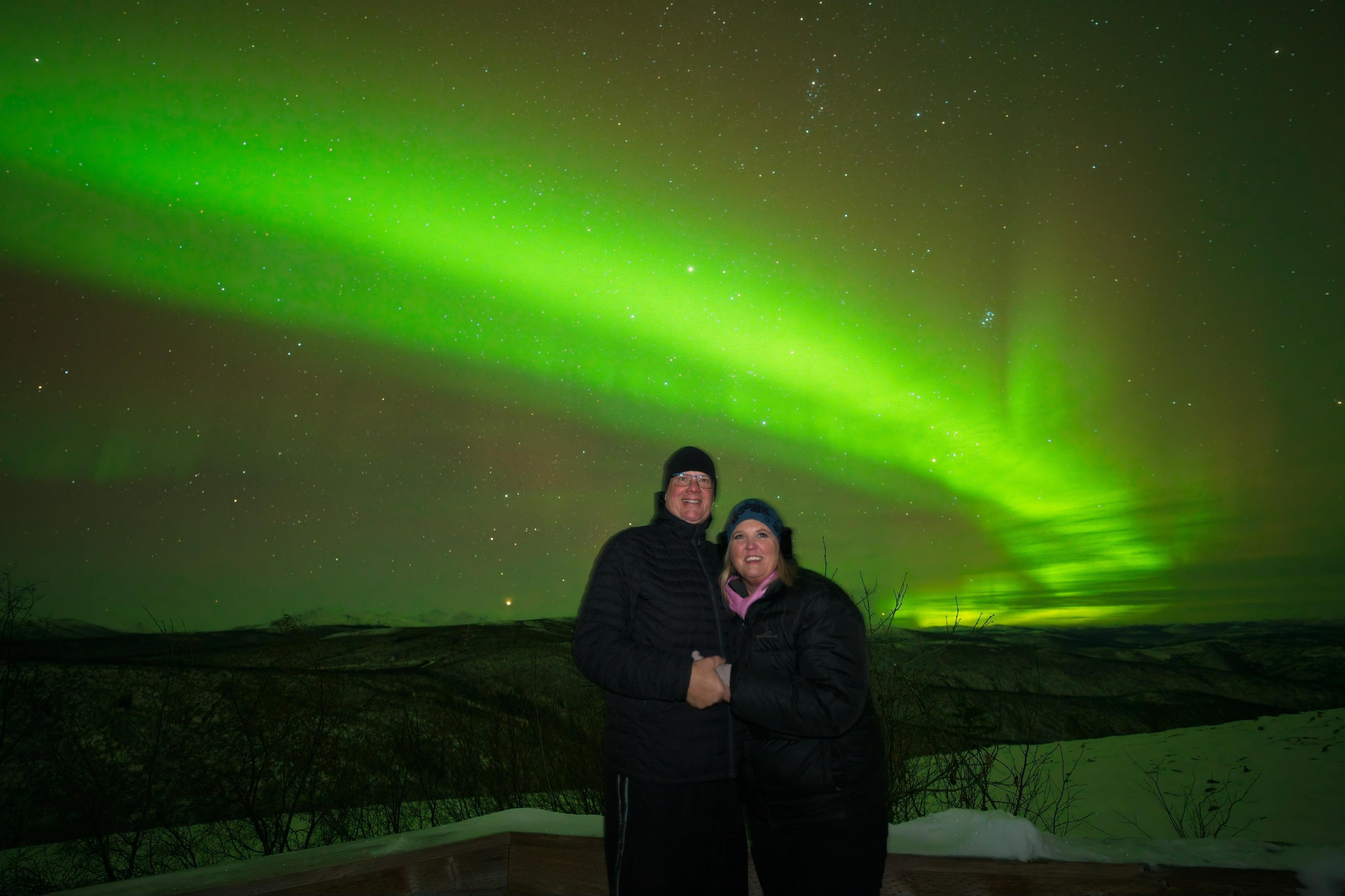
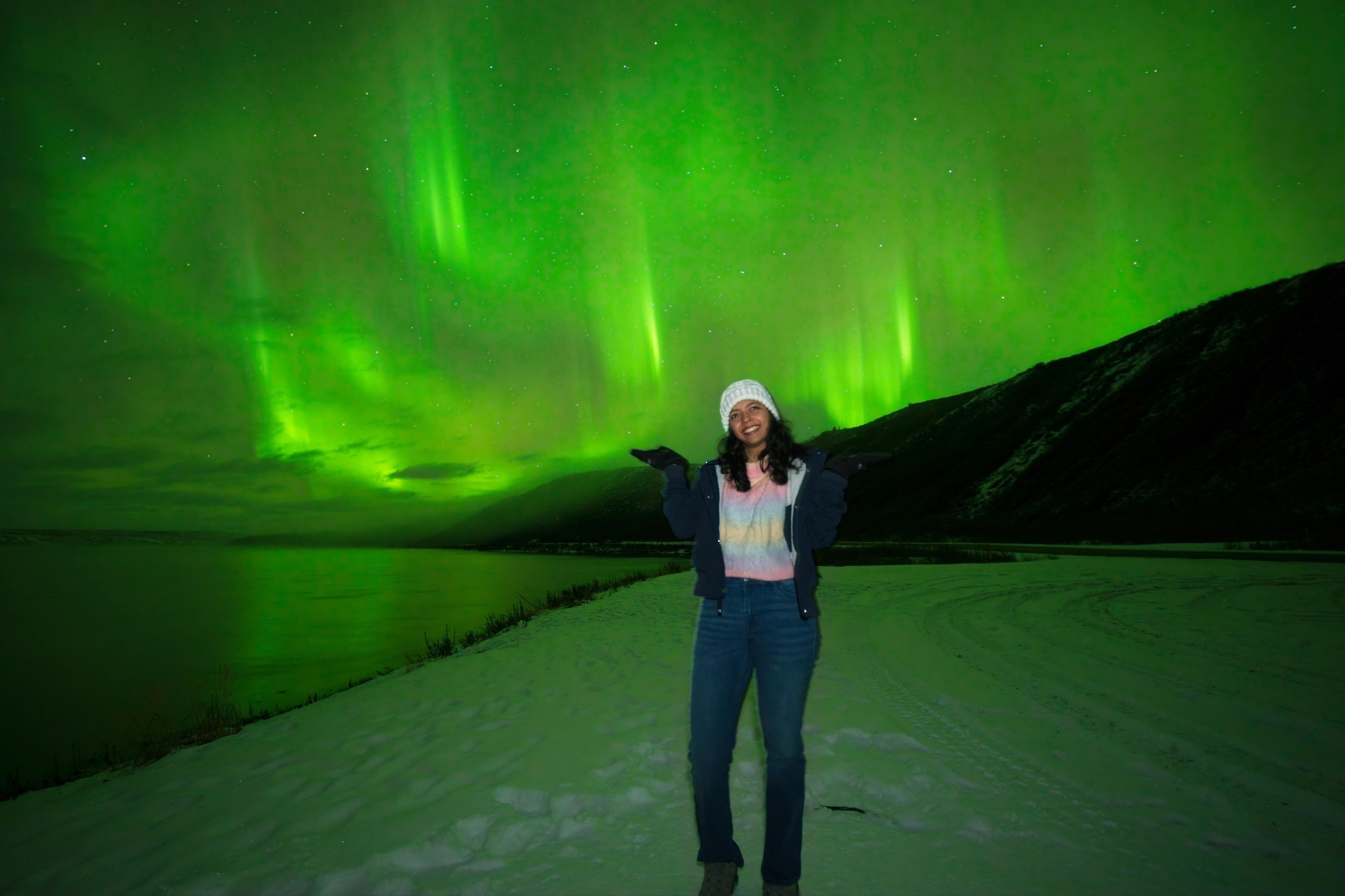
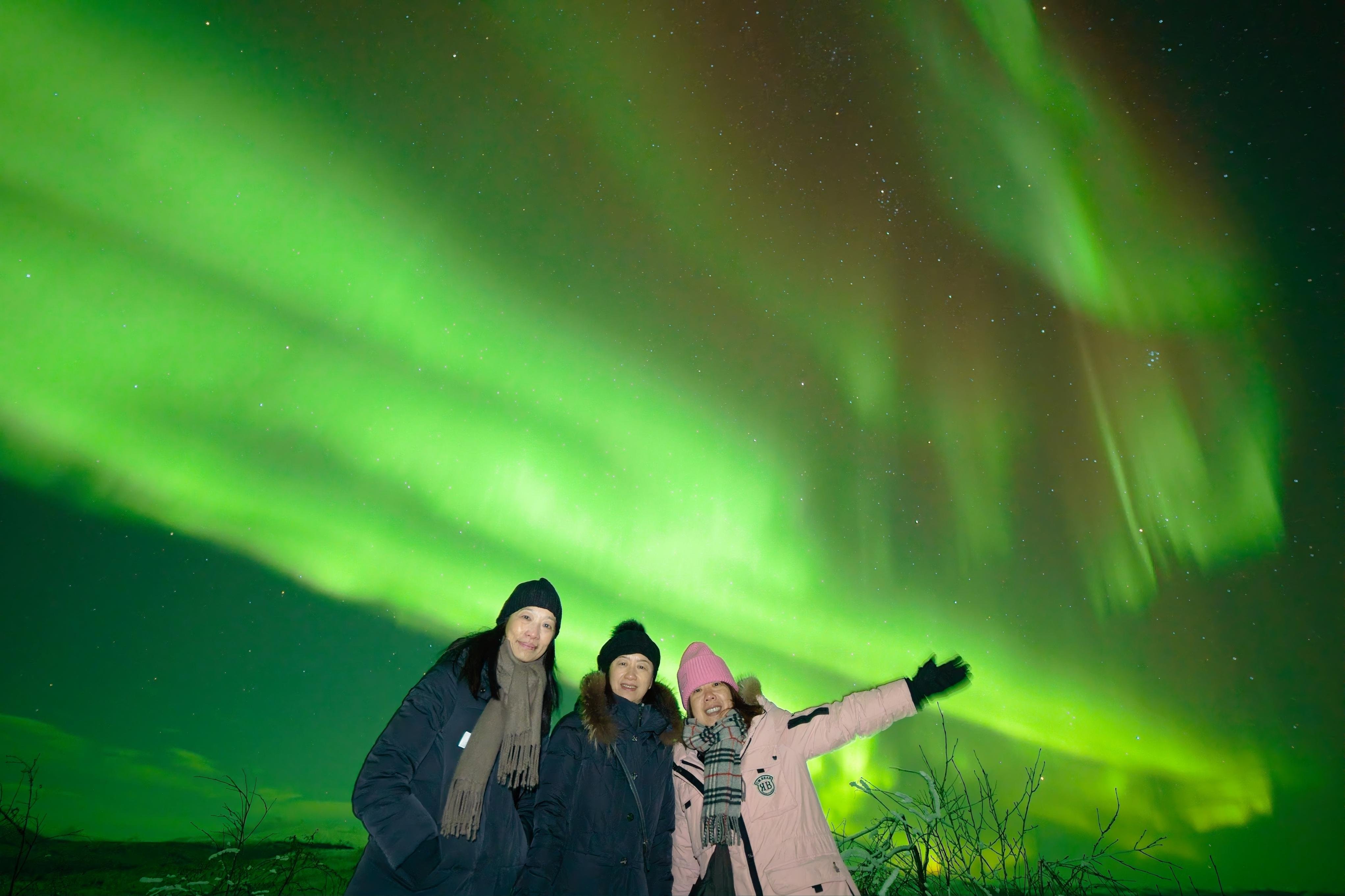
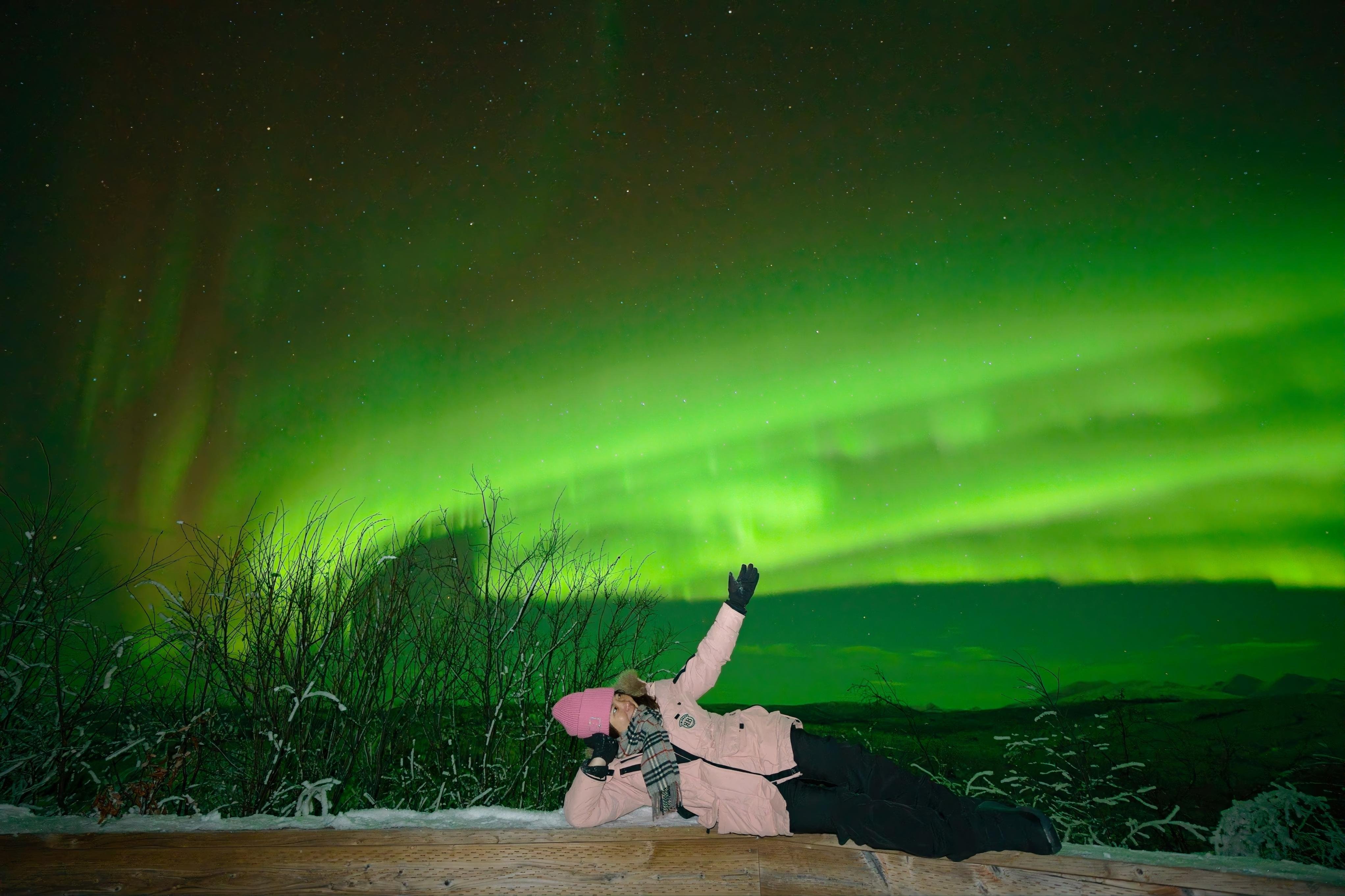
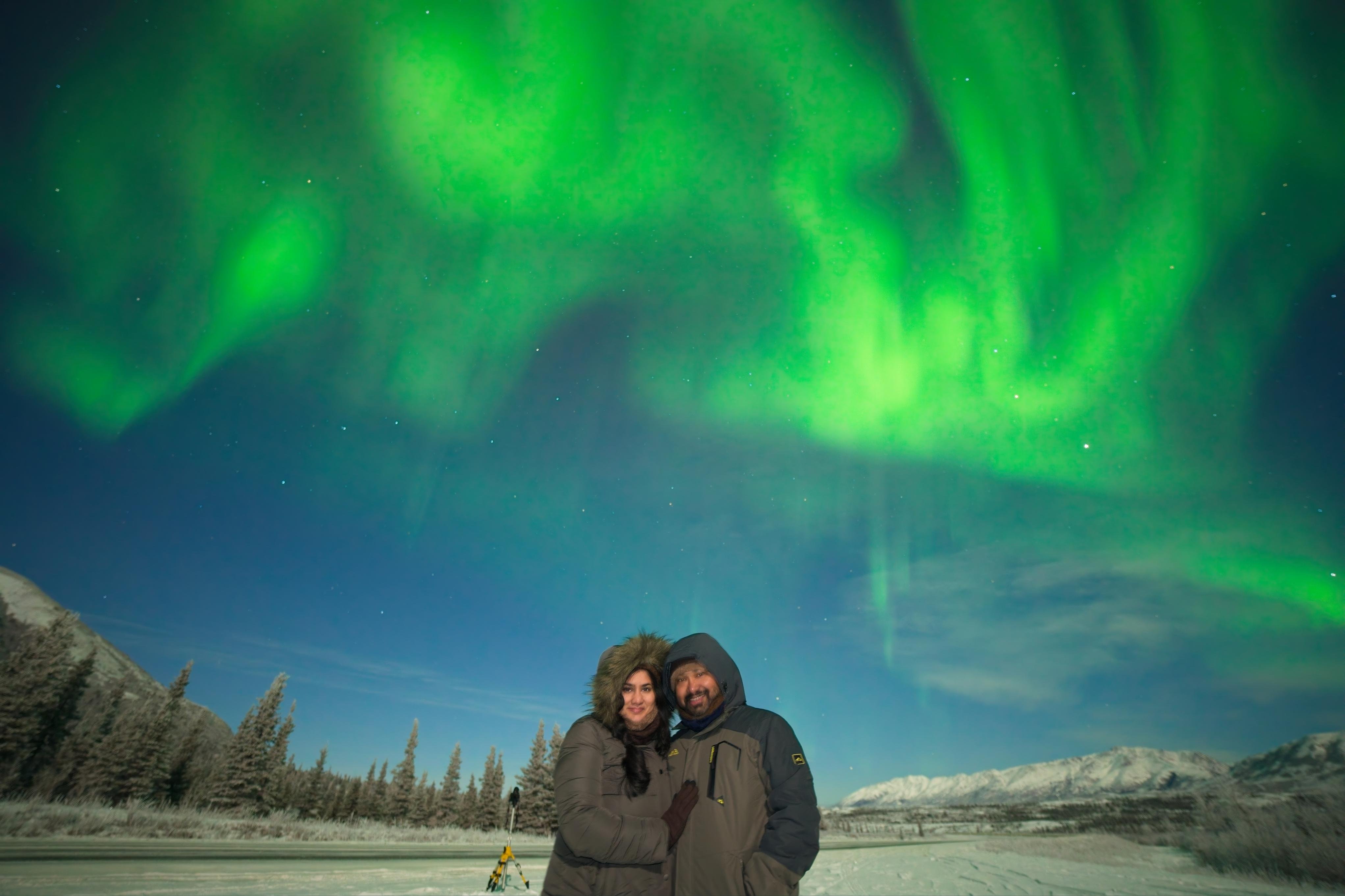
When the aurora appears, step outside and look up. Your guide takes long-exposure photos of you under the Northern Lights, so you can just soak it in. Then it's a warm ride back to your hotel.
Photo Gallery
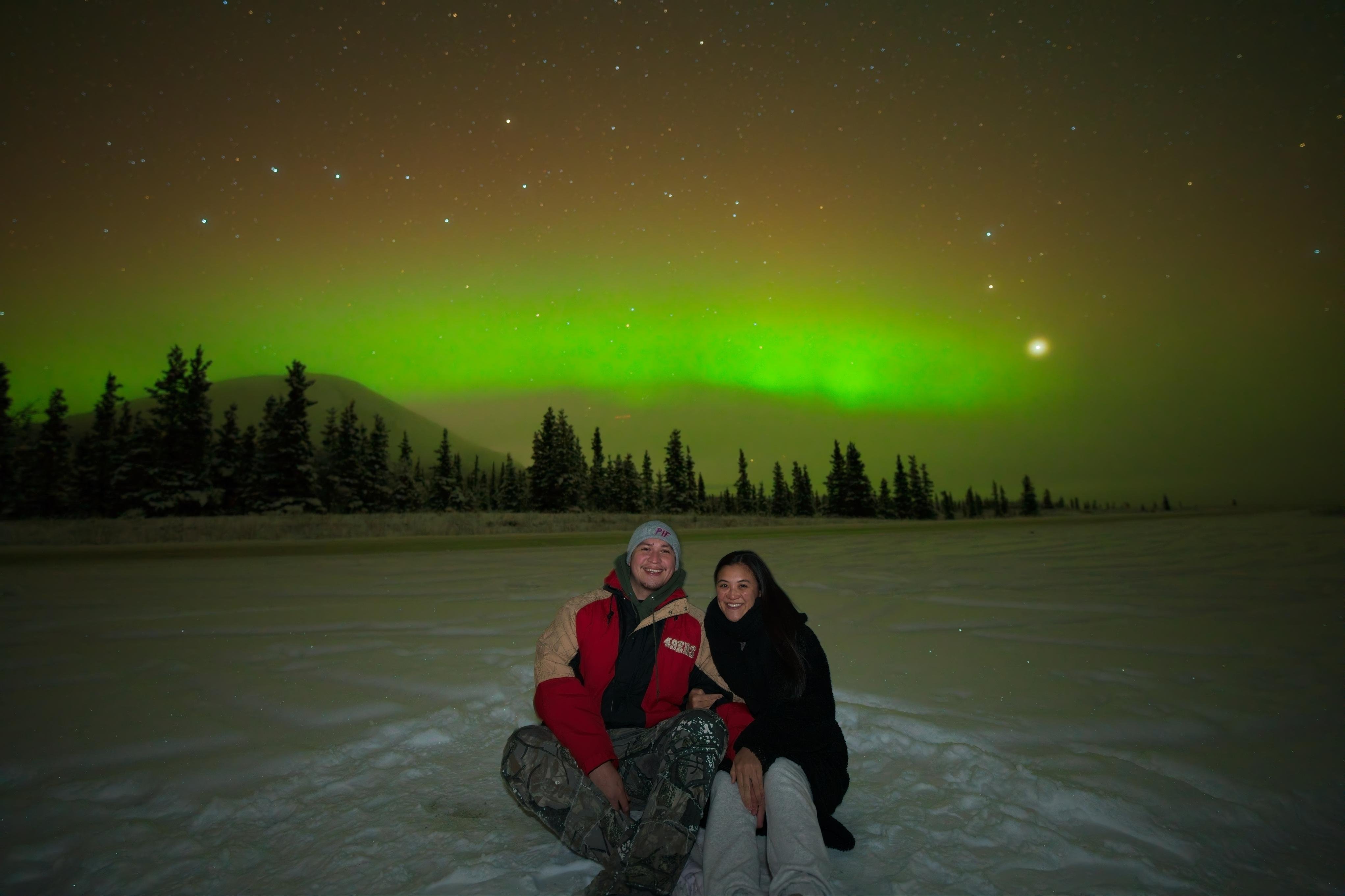
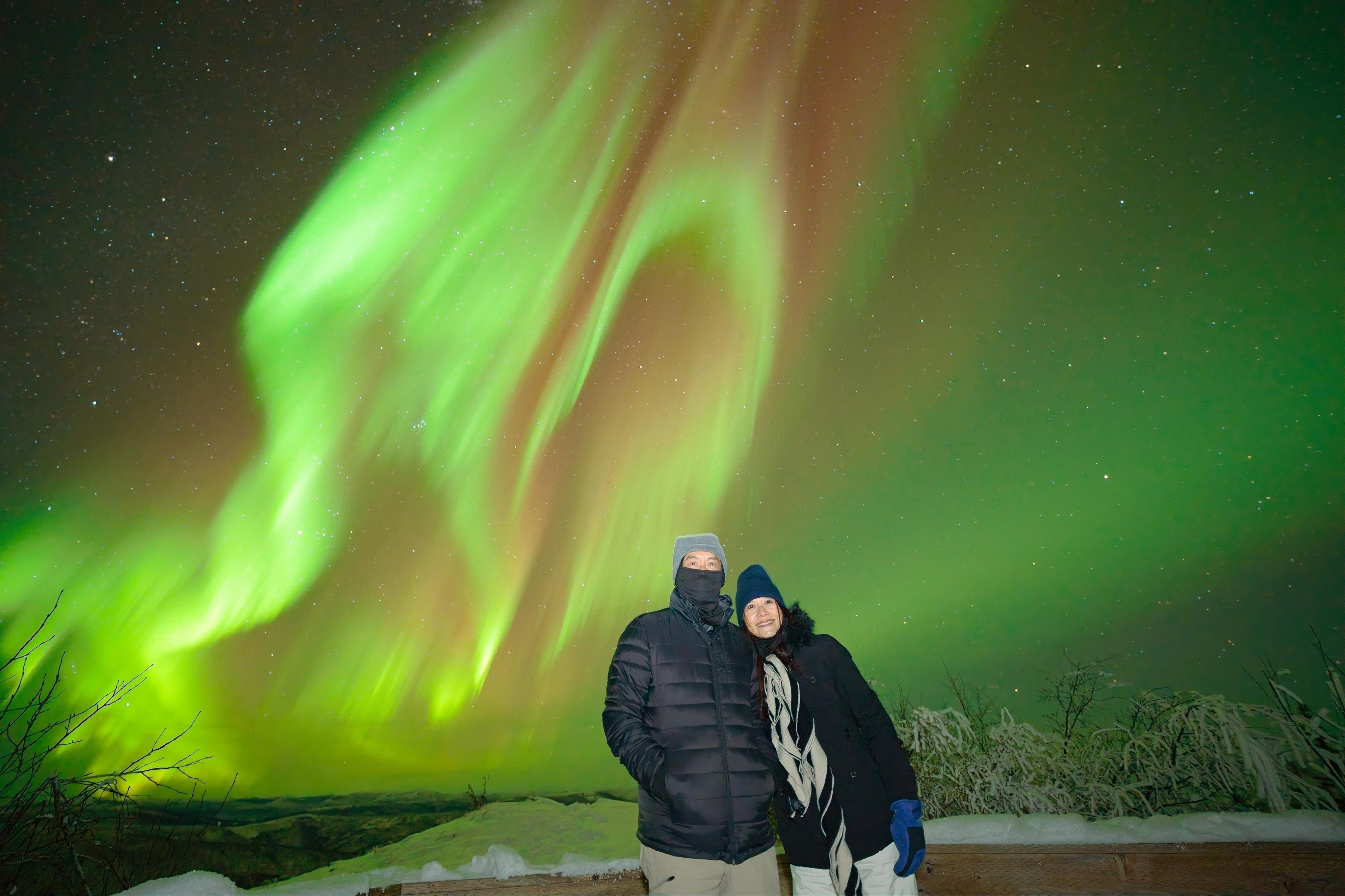
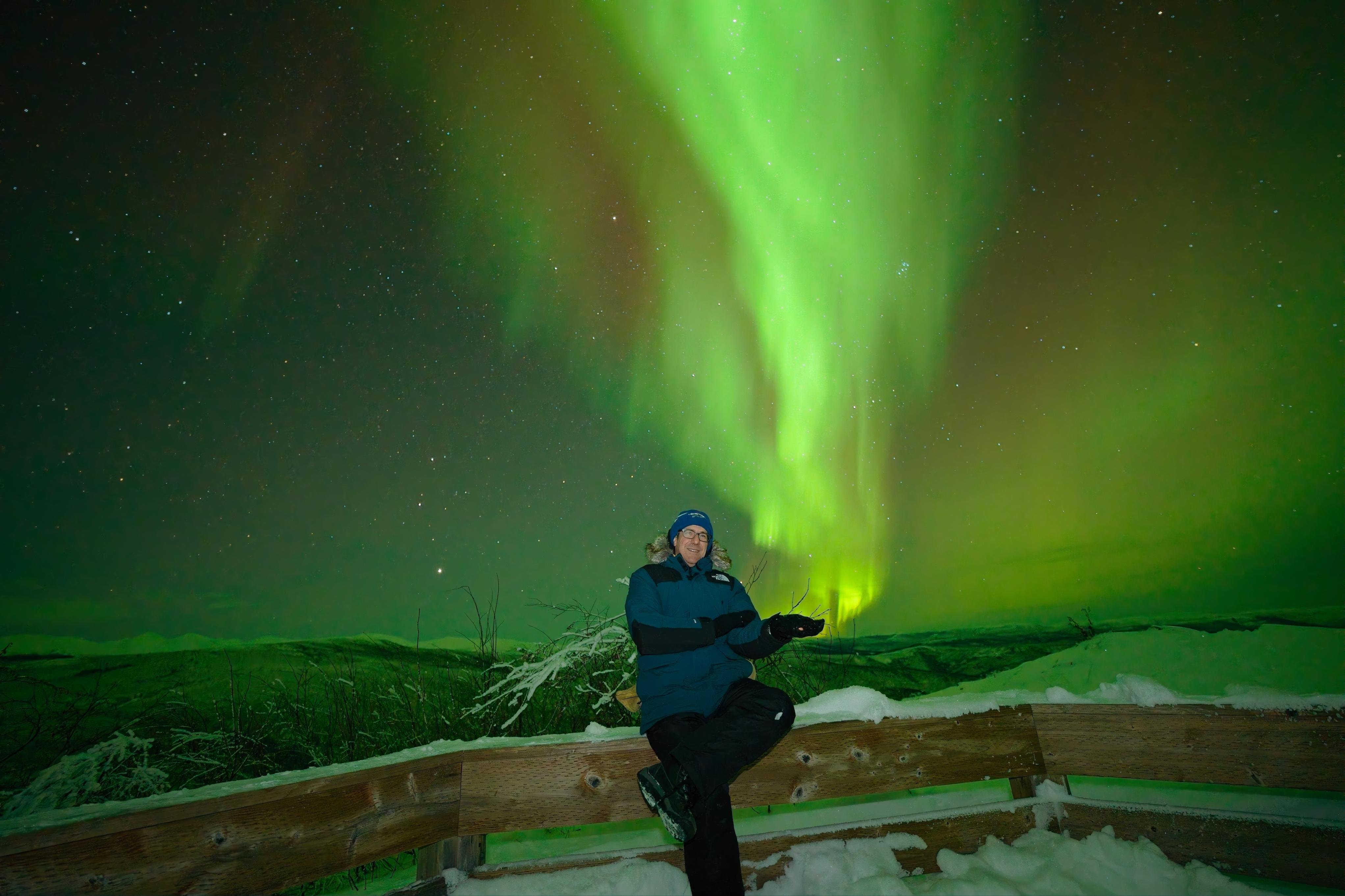
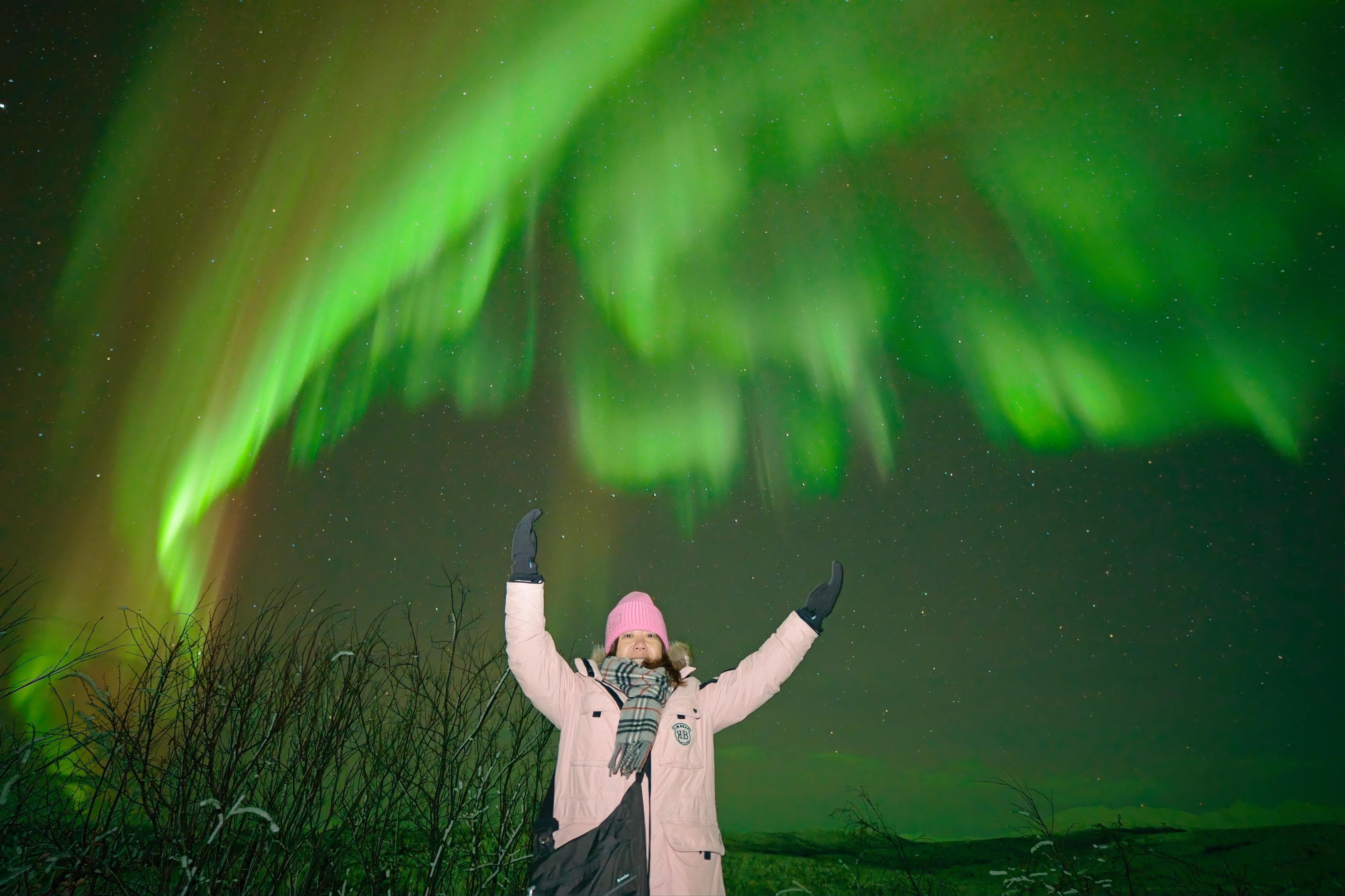
Dark-sky ridgelines, heated lodges, and the Northern Lights overhead — moments from guided Fairbanks aurora tours.
Book Your Experience
Select your preferred date and time. Instant confirmation — free cancellation up to 24 hours before departure.
Wondering whether a Fairbanks Northern Lights tour is worth it? Here's how the guided experience compares to going it alone.
| Feature | RECOMMENDED Guided Aurora Tour | Self-Drive Aurora Hunting | Waiting From Your Hotel |
|---|---|---|---|
| Getting to Dark Skies | Guide drives you away from Fairbanks' light dome to a proven dark-sky spot | Rent a car and navigate icy, sub-zero roads yourself in the dark | Stuck under city light pollution — only very strong displays show |
| Somewhere Warm to Wait | ✓ Heated cabin, lodge, or glass house with hot drinks and snacks | Your car, running the heater in a pullout for hours | ✓ Warm, but poor viewing and easy to miss a short display |
| Knowing Where & When | Guide reads cloud cover and the aurora forecast in real time | You check the Kp index and Geophysical Institute forecast yourself | Passive — you only see it if it happens to be strong and overhead |
| Photos of You Under the Lights | ✓ Guide takes long-exposure photos of you with the aurora | Set up your own tripod and camera in the cold | Phone snapshots through a window — usually blurry |
| Best For | First-timers and anyone who wants the odds maximized | Experienced cold-weather drivers with their own gear | A backup on a night you didn't book anything |
| Free Cancellation | ✓ Free cancellation up to 24 hours before on most tours | Not applicable | Not applicable |
| Starting Price | From $215/per person | Car rental $80–150/day + fuel + your time | $0 — but the lowest odds of a good sighting |
| Book Now |
More Options
Chena Hot Springs, the Arctic Circle, dog sledding, or a warm glass-house viewing — browse popular alternatives, all with free cancellation.
 BUDGET PICK
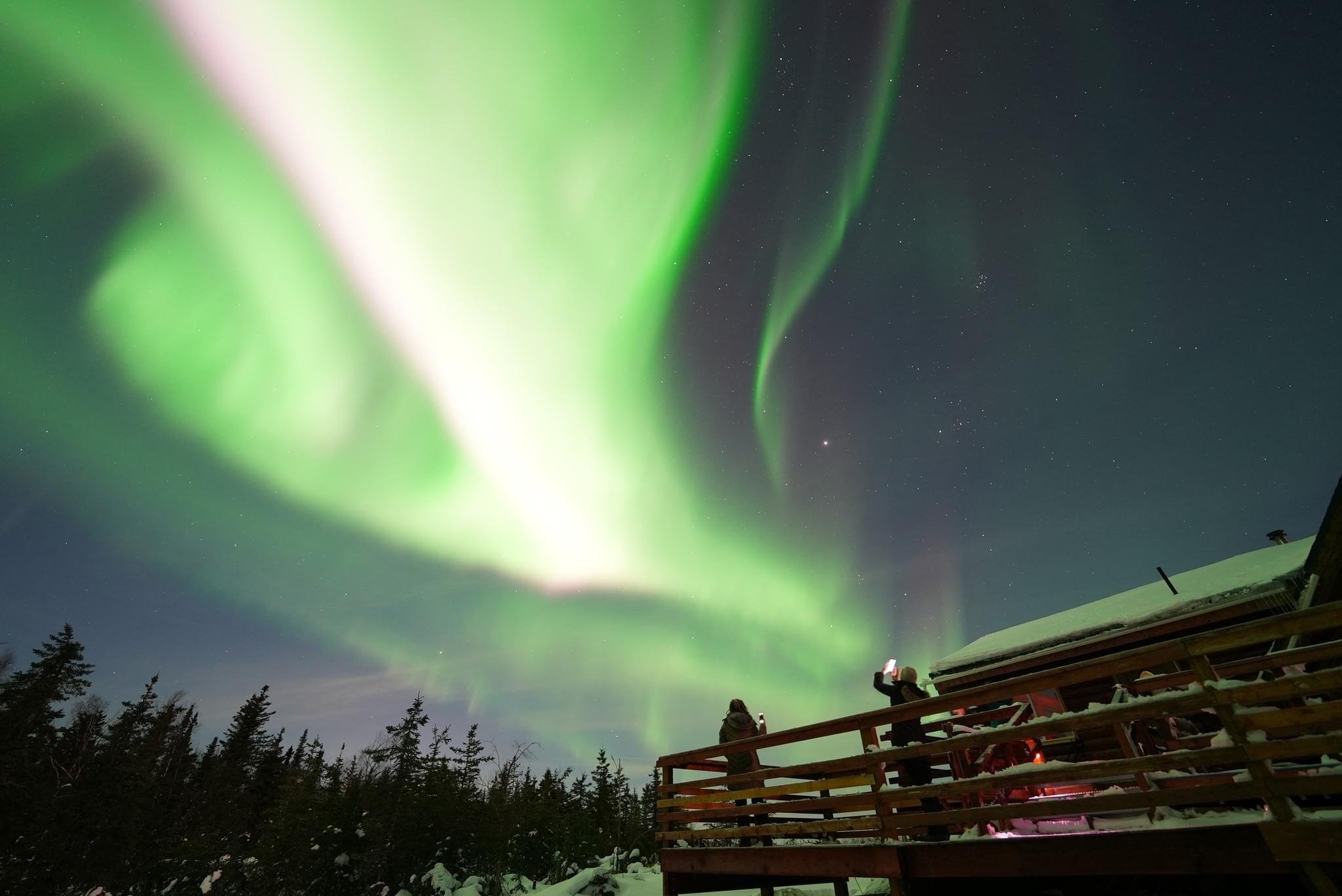
Watch the aurora from a cozy ridge-top Alaskan cabin about 40 minutes from Fairbanks. Warm up with unlimited hot cocoa, coffee, tea, and snacks, then step outside under dark skies. Hotel pickup and drop-off included; optional aurora photos.
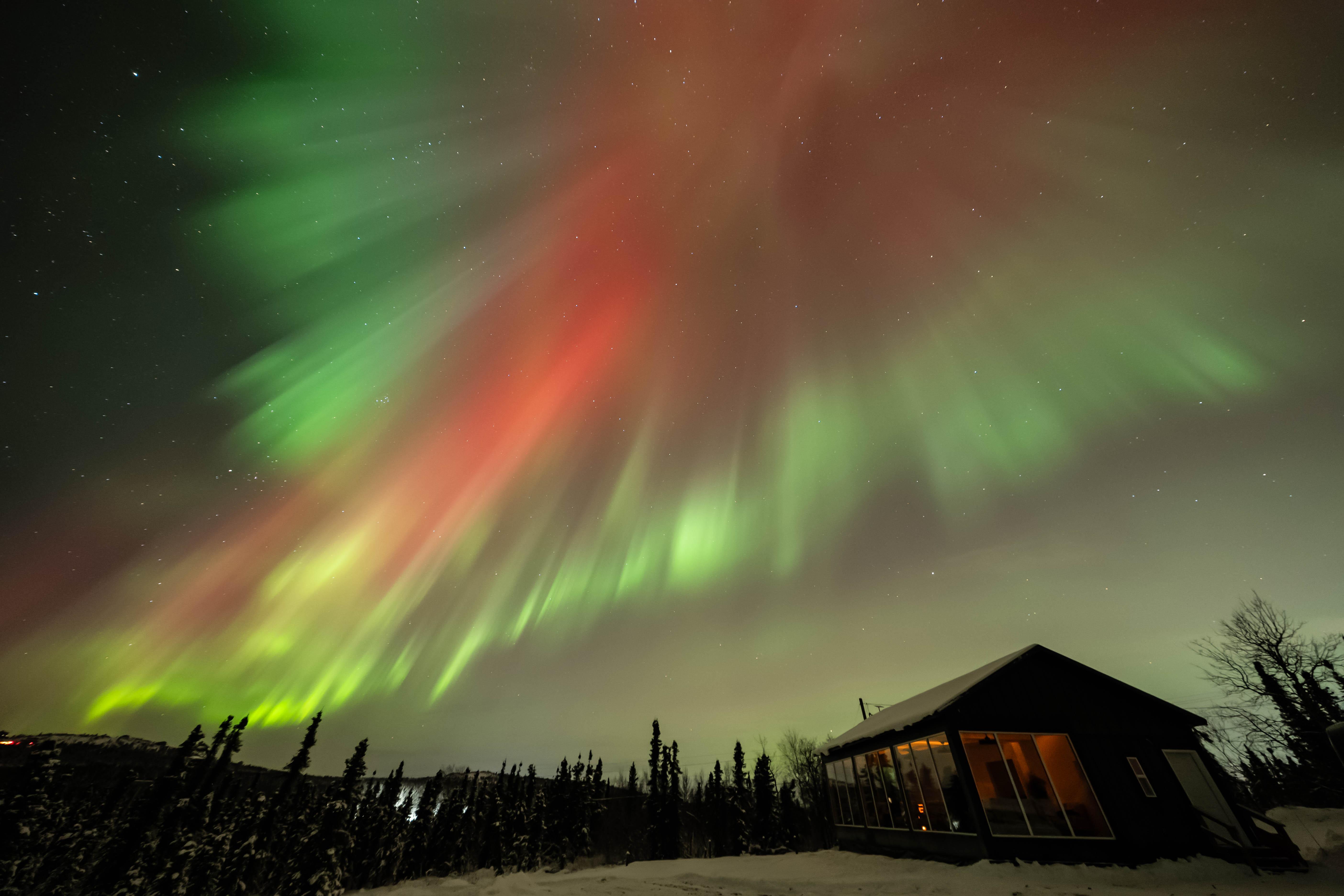 STAY WARM
View the Northern Lights in warmth from a 270-degree glass house atop Cleary Summit, one of the best dark-sky spots near Fairbanks. Floor-to-ceiling windows, hot drinks, snacks, and photo help mean no standing outside in the cold.
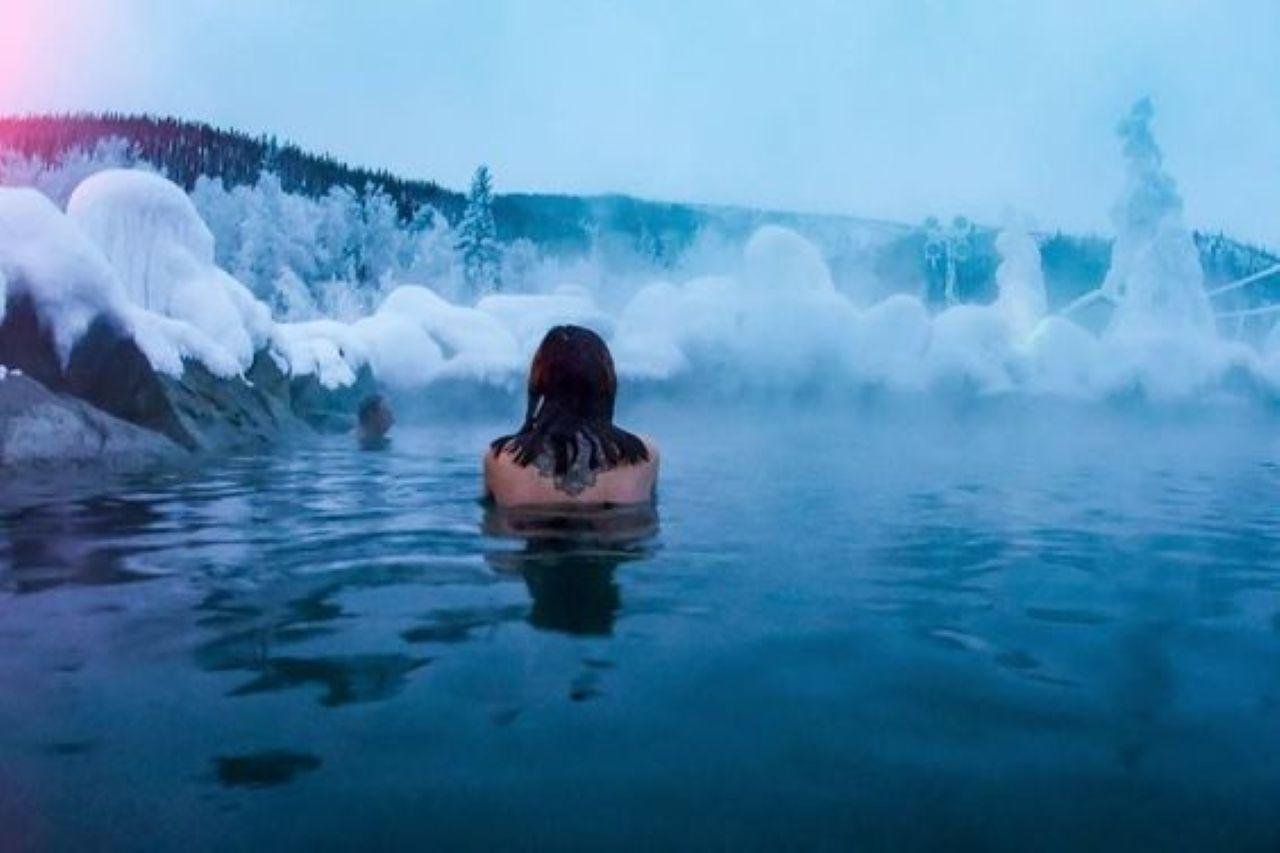 MOST POPULAR
Combine aurora viewing with a soak at Chena Hot Springs Resort, 60 miles from Fairbanks. Tour the Aurora Ice Museum, relax in the outdoor mineral hot springs beneath the stars, and watch for the Northern Lights.
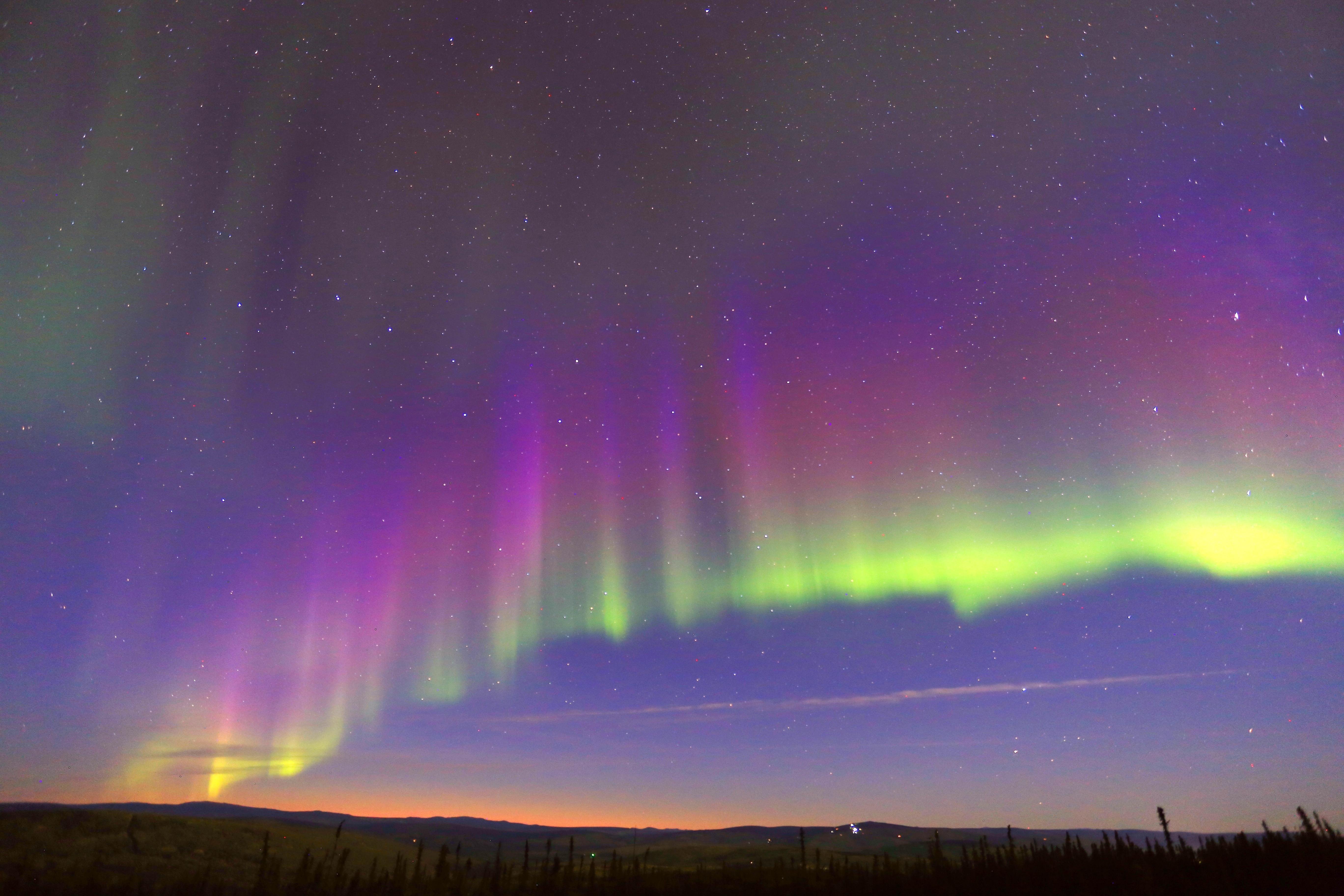 DOG SLED
A moonlit dog-sled ride under the Aurora Borealis followed by a home-cooked salmon dinner in a cozy off-grid yurt. Hotel pickup and drop-off from Fairbanks included.
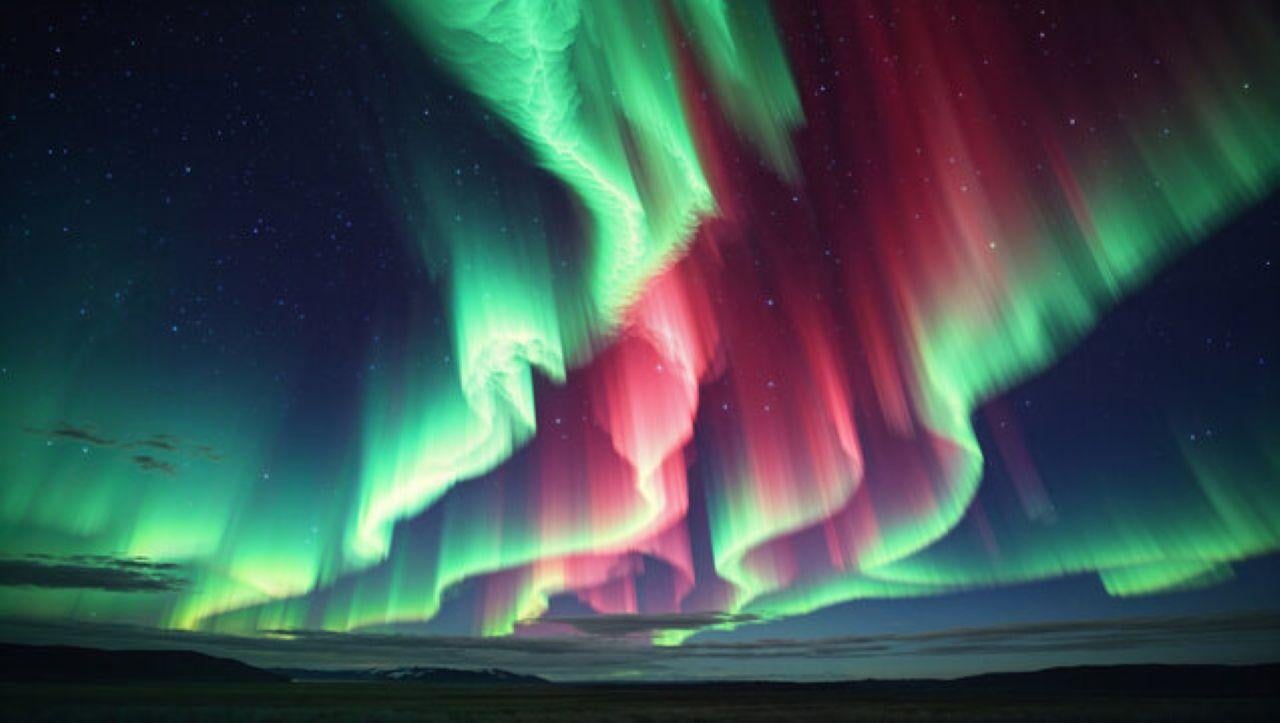 ARCTIC CIRCLE
A full-day expedition from Fairbanks across the Arctic Circle along the Dalton Highway and Trans-Alaska Pipeline, with an official crossing certificate and an aurora search on the drive back.
Guest Reviews
"I highly recommend their tour! Not only do you learn about the auroras and how they work, but you also have the opportunity to spend time with two people who are passionate about their work and strive to provide an unforgettable experience!"
"SUPER GREAT! Our tour guides were absolutely fantastic! We had one of our greatest travel experience witnessing the amazing Aurora Borealis!"
"Ed and Elena went above and beyond to make sure we had the best experience possible. Great communication as they figured out where we would need to go before the scheduled pickup time and changed the time to earlier in order to give us enough time to make the three hour drive necessary the night we went. Nice Sprinter Vans for our drive north. Very enthusiastic and knowledgeable about the science behind the lights. We watched from about 10-1, then back in the van for snacks, water and hand and foot warmers. We assumed we were done, but Ed wasn’t satisfied with the show we saw. Another drive and wait, then amazing aurora show from 2:30-4. They set up cameras to capture us with the lights and a time lapse video they shared after the tour. Overall, very professional, incredible tour and we would book again without hesitation!"
"Everything was perfect. Ed so kind and pro to get the aurora. He knew perfect spot for it. This is become the best moment of my life ever, Aurora was dancing in the clear sky all night. Thank you also for his wife that took unforgetable photos and videos of us. They also provide : toe warmers, snack, water, even a slice of cake in the end. It was so cute. I highly recommended them for everybody that wanna see Northern Light at least one in the lifetime."
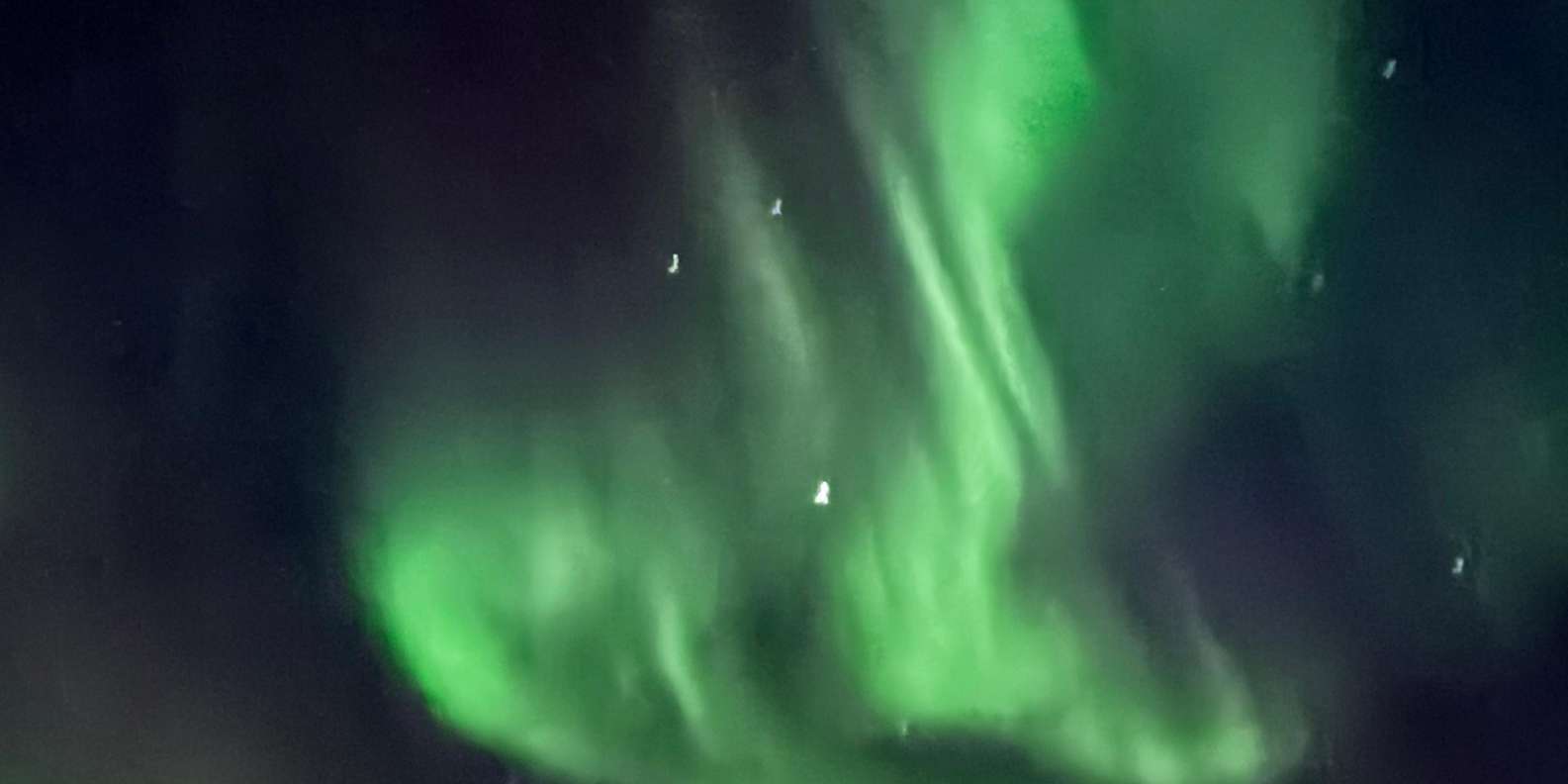
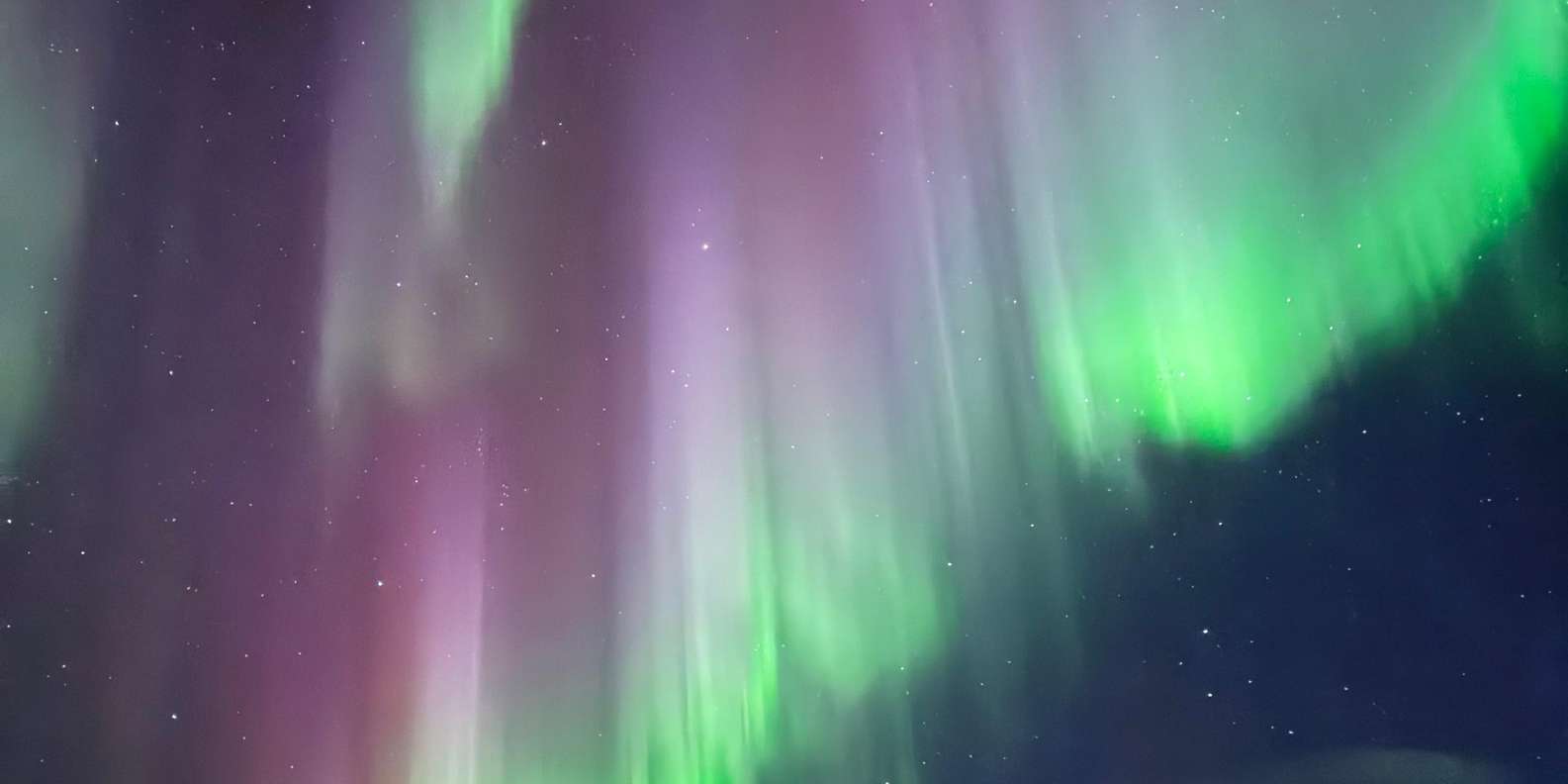
"Ed and Elena were both very knowledgeable and we learneda lot about the lights"
"Our tour was amazing. We felt informed, supported, entertained & educated all the way. The van was perfect - held about 14 of us and we were all comfortable the entire night. Because of cloud cover, we drove a long ways to see the lights but it was well worth it. The lights were amazing. We could warm up in the van as needed and snacks/water were provided. Bathroom facilities stops were an unexpected plus. The photography was a wonderful addition to capture the fun pictures that we couldn’t do on our own. Apple and Samsung phones did great in capturing the still photos. Nothing compares to the movement of the dancing aurora in person. They call the aurora a lady. 🥰"
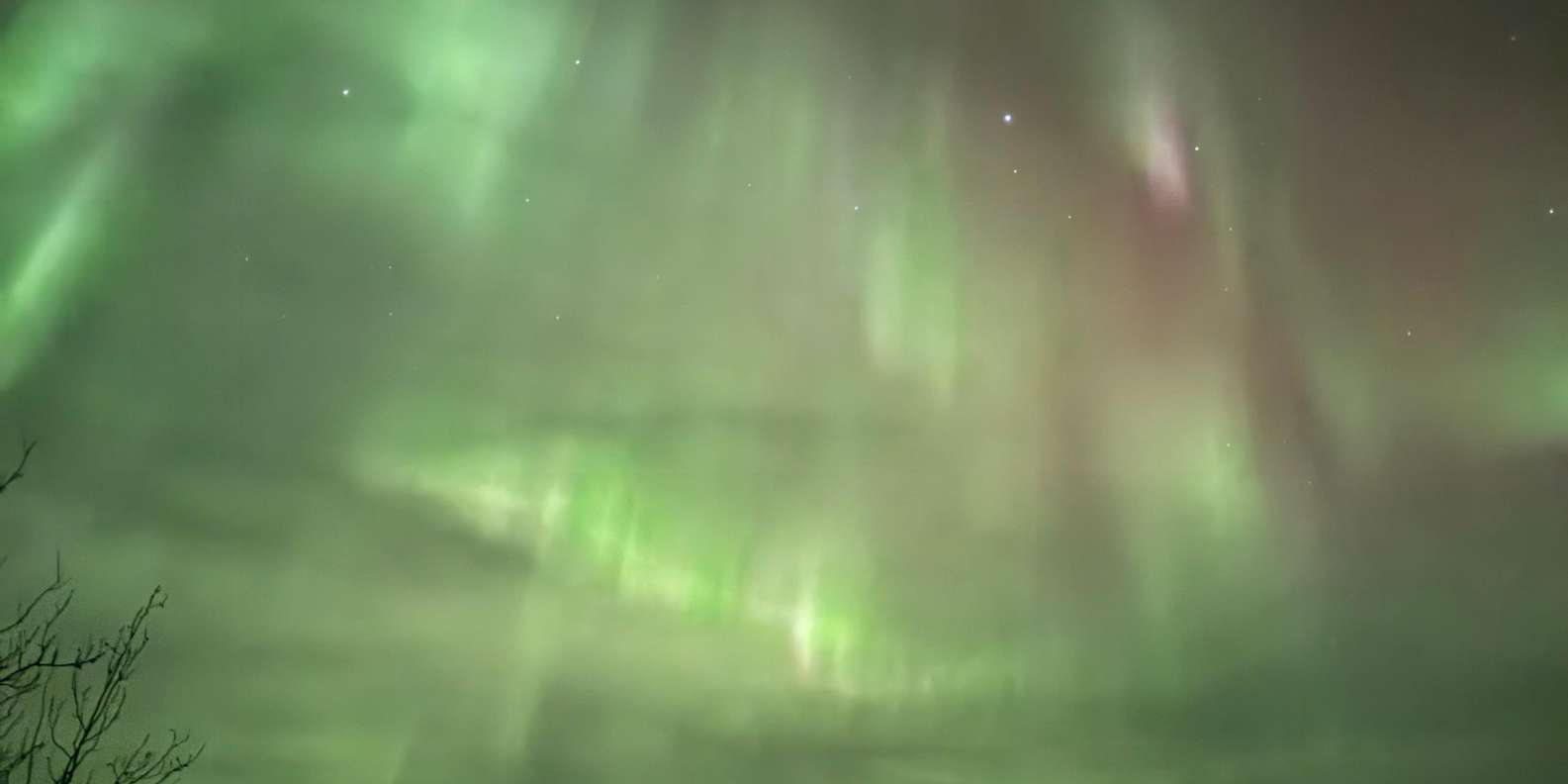
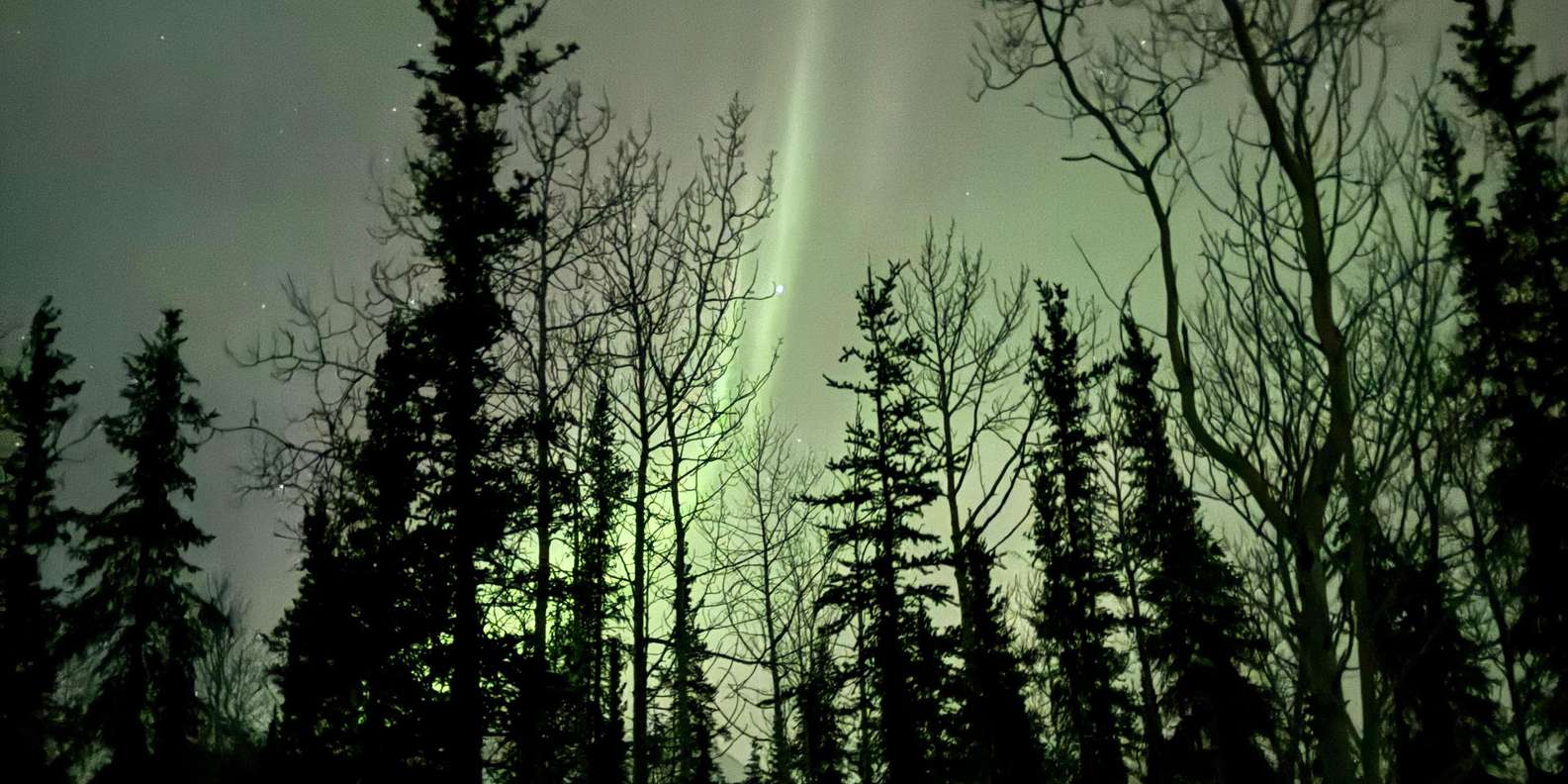
"We loved the tour, we saw the lights on our first night and the guides are the best really, they provide hand and toe warmers, snacks, water, and at the end they gave us a piece of delicious cake. They know exactly how to hunt the Auroras so I would definitely recommend going with them to increase your chances of seeing them."
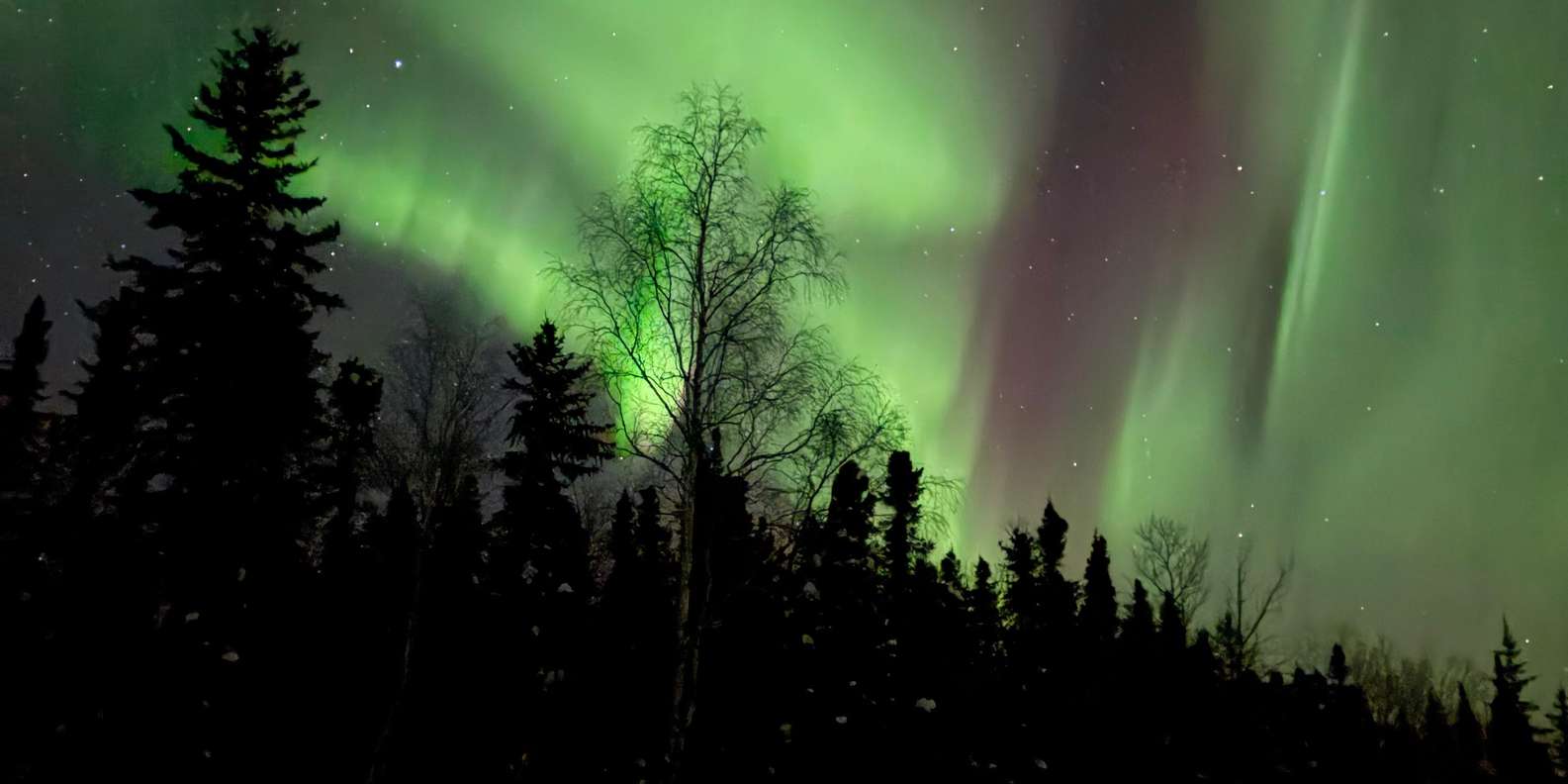
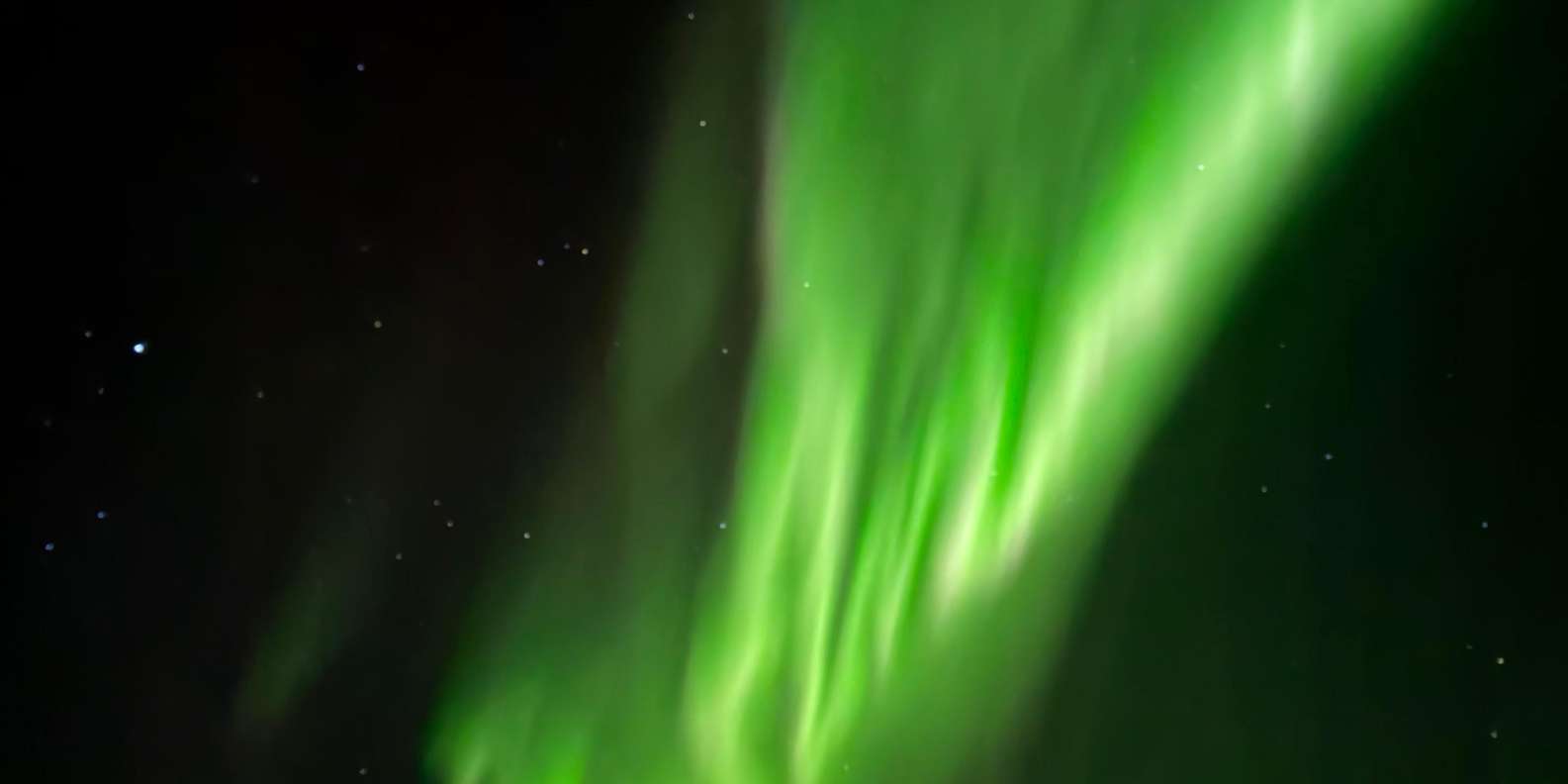
"Great guides. They did everything they could to make our trip amazing. They are very professional. They went above and beyond. We had a great time."
Read all 251 verified reviews
See All ReviewsThe Fairbanks Aurora Planner
What a guided aurora tour actually includes, when to come, how the forecast works, and the honest truth about guarantees. Written for the coming season — reviewed July 2026.
Fairbanks bills itself as one of the best places on Earth to see the aurora borealis, and for once the marketing is grounded in physics. The city sits at about 64.8°N latitude, directly beneath the auroral oval — the ring-shaped band around the geomagnetic pole where the Northern Lights are most active. That single geographic fact is why the aurora appears overhead here on nights when southern Alaska sees nothing. According to the University of Alaska Fairbanks Geophysical Institute, visitors who stay at least three nights and actively go out looking each night have better than a 90% chance of catching a display when skies are clear. It is never a certainty — more on that below — but the odds are genuinely stacked in your favor.
This page is a planning and booking resource. It’s worth being upfront that July is the off-season: in midsummer, Fairbanks has near-24-hour daylight and the sky never gets dark enough for aurora to be visible. The viewing season runs roughly August 21 to April 21, so if you’re reading this in summer, you’re planning ahead for the coming winter — exactly the right time to lock in a tour.
You can absolutely see the aurora on your own from Fairbanks. But a guided tour solves the three problems that sink most independent attempts. First, darkness and distance: guides drive you away from the city’s light dome to a genuinely dark horizon, and they do the driving on icy, sub-zero winter roads so you don’t have to. Second, the waiting game: aurora viewing means being out from roughly 10 PM to 3 AM, and the good operators give you somewhere warm to wait — a heated cabin, a ridge-top lodge, or a 270° glass house — with hot cocoa, coffee, tea, and snacks, rather than shivering in a parking lot for four hours. Third, the photo: your guide sets up a tripod and takes long-exposure shots of you beneath the lights, so you leave with real images instead of a phone-blur and a memory.
A typical Fairbanks aurora-viewing tour includes hotel pickup and drop-off, a local guide who reads the cloud cover and forecast, a heated indoor space, snacks and hot drinks, and photography help. Our featured tour is a flexible chase: the guide adjusts the distance and route based on where the skies are clearest, running anywhere from about 8 to 12 hours if that’s what it takes to find a break in the clouds.
Every month in the season can deliver, but they aren’t equal. November through March give the longest hours of darkness and, statistically, the strongest showings; many veterans consider February and March the sweet spot, when nights are still long but the deepest cold is easing and clear high-pressure skies are common. Late August and September offer a shoulder-season bonus: milder temperatures and the chance to see the aurora reflected over unfrozen water, though nights are shorter.
Two other factors matter. A dark sky helps, so nights around the new moon are better for faint displays than a bright full moon. And there’s the 11-year solar cycle. Solar Cycle 25 reached its maximum in October 2024 — its strongest peak since the mid-2000s — and while activity is now in its gradual decline, 2026 and 2027 remain among the most active aurora years of the decade before things taper toward solar minimum around 2030. In plain terms: the coming seasons are still an excellent time to come.
You’ll see the aurora forecast quoted as a Kp number from 0 to 9 — a global measure of geomagnetic activity averaged over three-hour windows. Higher Kp means the auroral oval expands and the lights push farther south. But here’s the Fairbanks advantage: because the city already sits under the oval, aurora is often visible here at Kp 1 or 2, levels that would show nothing in the Lower 48. The Geophysical Institute publishes a three-day Alaska-time forecast that guides and locals check religiously. Don’t over-index on a single low Kp number — under the oval, clear skies matter more than a big storm.
Fairbanks aurora tours come in flavors, and we’ve carded five that span the range. A Chena Hot Springs trip pairs aurora viewing with a soak in naturally heated mineral pools (kept between about 90°F and 110°F) 60 miles from town, plus the world-famous Aurora Ice Museum. An Arctic Circle expedition is a full-day epic up the remote Dalton Highway — the “Ice Road Truckers” road — alongside the Trans-Alaska Pipeline, with an official crossing certificate and an aurora search on the drive back. And a moonlight dog-sled tour lets you mush through the snow beneath the lights before a home-cooked dinner in a yurt. If you’d rather stay warm and comfortable, a glass-house or heated-lodge viewing keeps you indoors behind floor-to-ceiling windows.
The Northern Lights are a natural phenomenon, and no operator can promise them on any given night. Cloud cover, weather, and solar activity all decide it, and reputable Fairbanks operators say so plainly — most run their tours regardless of forecast (a clear night can turn active in minutes) and have a no-refund-for-no-aurora policy, because they’re selling the experience and the odds, not a sighting. That’s exactly why the season length, the multi-night stay, and the guide’s ability to chase clear skies matter so much: they’re all ways of maximizing a probability, not buying a certainty.
Dress for real cold — deep-winter Fairbanks nights routinely drop well below 0°F. Think serious layers: thermal base layers, an insulated parka, snow pants, a warm hat, insulated waterproof boots, and two pairs of gloves (a thin liner so you can work a camera, plus heavy mitts over the top). Hand and toe warmers are worth their weight. Tours provide warm indoor space, but you’ll want to step outside comfortably when the sky lights up. Our guides on what to pack, when to book, and how to photograph the aurora are in the aurora guides — start there, then pick your tour below.
Join guests who rated this experience 4.8/5. Hotel pickup, a flexible multi-hour aurora chase away from city light, snacks and drinks, and free photos of you under the Northern Lights — all included. Free cancellation. Starting from $215 per person.
Check Availability & BookCan't Make These Dates?
Find a tour that fits your schedule — all with instant confirmation and free cancellation.
Honest answers about seasons, guarantees, the forecast, and what to expect on a Fairbanks aurora tour. Reviewed July 2026.
The Fairbanks aurora-viewing season runs from roughly August 21 to April 21, when nights are dark enough. November through March offer the longest dark hours and statistically the strongest displays, and many aurora chasers consider February and March the sweet spot. Nights around the new moon are darker and better for faint aurora. See our best time to see the Northern Lights in Fairbanks guide for a month-by-month breakdown.
No — and any operator who guarantees them is not being honest. The aurora is a natural phenomenon; cloud cover, weather, and solar activity decide whether it appears on a given night. What a good tour does is maximize your odds: dark-sky locations, a guide who chases clear skies, and multi-hour patience. Most Fairbanks operators run tours regardless of forecast and have a no-refund-if-no-aurora policy, because they sell the experience and the odds, not a sighting. The University of Alaska Fairbanks Geophysical Institute notes that visitors who stay three or more nights and go out each clear night have better than a 90% chance of seeing a display.
The Kp index is a 0–9 scale measuring global geomagnetic activity in three-hour windows; higher numbers mean the aurora pushes farther south. Because Fairbanks sits directly under the auroral oval at about 64.8°N, the aurora is often visible here at Kp 1 or 2 — levels that show nothing in the Lower 48. The Geophysical Institute publishes a three-day Alaska-time forecast. Under the oval, clear skies matter more than a big Kp number. More detail is in our timing guide.
Most Fairbanks aurora tours run late into the night — typical viewing is between about 10 PM and 3 AM. Lengths vary by tour: a heated-lodge or glass-house viewing runs around 4–5 hours, while a flexible aurora chase can last 8 to 12 hours as the guide follows the clearest skies. Full-day Arctic Circle trips can run 15 hours or more. Hotel pickup and drop-off are usually included.
A typical guided aurora tour includes round-trip hotel pickup and drop-off, a local guide, a heated indoor space (cabin, lodge, or glass house), hot drinks and snacks, and photography help — your guide takes long-exposure photos of you under the lights. Our featured tour also chases flexibly, adjusting distance and route for the best chance of a clear sky. Exact inclusions vary by operator; check each tour's details when booking.
It's one of the most popular options because it stacks three experiences: aurora viewing, a soak in naturally heated mineral hot springs (about 90–110°F), and the world-famous Aurora Ice Museum, all 60 miles from Fairbanks with minimal light pollution. It's a longer evening (around 7 hours) and a memorable one even if the aurora is shy. Full details in our Chena Hot Springs aurora guide.
It's a full-day epic (15+ hours) up the remote Dalton Highway — the 'Ice Road Truckers' road — alongside the Trans-Alaska Pipeline, crossing the Arctic Circle with an official certificate, then searching for the aurora on the drive back. You're paying for the journey and the landmark as much as the lights. If your priority is aurora time specifically, a dedicated viewing tour gives you more of it. See our Arctic Circle aurora day-trip guide.
Dress for serious cold — deep-winter nights in Fairbanks routinely drop well below 0°F. Wear thermal base layers, an insulated parka, snow pants, a warm hat, insulated waterproof boots, and two pairs of gloves (a thin liner for your camera plus heavy mitts). Hand and toe warmers help a lot. Tours provide warm indoor space, but you'll want to step outside comfortably when the sky lights up. Our what to wear and how to photograph the aurora guide has a full packing list.
Yes. Most guides take photos of you under the aurora, but if you want your own shots, a camera on a tripod works best: wide aperture (f/1.4–2.8), ISO around 1600–3200, and an 8–15 second exposure, with manual focus set to infinity. Many recent phones (iPhone, Pixel, Samsung) can capture the aurora in night mode on a small tripod. Our photography guide walks through settings for cameras and phones.
Almost certainly not. Alaska cruises run May–September, and in Fairbanks midsummer the sky never gets fully dark (near-24-hour daylight around the summer solstice), so the aurora isn't visible even if it's active. Aurora viewing requires the dark-sky season, roughly late August to mid-April. If seeing the Northern Lights is your goal, plan a winter trip to Fairbanks rather than a summer cruise.
Prices vary by tour type. Heated-lodge and glass-house aurora viewings start around $136 per person; a flexible aurora chase with photography runs about $215; combo tours (Chena Hot Springs, dog sled and dinner) run roughly $275–320; and full-day Arctic Circle expeditions are around $330–363. Most include hotel pickup and free cancellation up to 24 hours before.
There is no single 'official' aurora authority; the Northern Lights are a natural event, not a venue. The tours listed here are operated by independent, licensed Alaskan tour companies, and we help you compare and book them. We're an affiliate — when you book through our links the price is the same for you, and we may earn a commission. We prioritize top-rated operators with strong review counts, hotel pickup, and free cancellation.
Still have questions? Email us at info@fairbanksnorthernlightstour.com